
Navigating AHPRA & CPD in 2025: An Essential Guide for IMGs
Introduction
Starting Australian registration as an International Medical Graduate can feel like staring at a train map written in code. There are stops called AHPRA, AMC, PESCI, CPD, RACGP, and more, all linked by rules that are hard to see at first glance. Our guide, “Navigating AHPRA & CPD in 2025: An Essential Guide for IMGs”, is written to turn that confusing map into a clear route.
AHPRA sits at the centre of medical practice in Australia. It works with the Medical Board of Australia to decide who can register, under what conditions, and how doctors must keep their skills current. Continuing Professional Development (CPD) is a key part of that system, and the 2025 CPD standard makes the expectations for every registered doctor much clearer and more structured than before.
For IMGs, this mix of AHPRA rules, registration pathways, and CPD requirements can feel overwhelming, especially while also preparing for the AMC Clinical Exam or PESCI interviews. At LearnMedicine, we see this every day in our community. That is why we built this guide: to bring everything together in one place and show how AHPRA pathways and CPD fit with your exam preparation and early career steps.
By the end, you will know:
-
which registration pathway suits you
-
when CPD starts to apply
-
how the 50‑hour requirement works
-
how to turn your Professional Development Plan (PDP) into a real career plan
You will also see how LearnMedicine, as the only AMC‑accredited CPD Home built for IMGs, can support you from first exam through to stable Australian practice.
Key Takeaways
-
AHPRA offers three main registration pathways for IMGs. Each has its own entry rules, steps, and timelines. Picking the right pathway early makes every later decision much easier.
-
All doctors with AHPRA registration must complete 50 hours of structured CPD per year under the 2025 standard. These hours are split across education, reviewing performance, and measuring outcomes. When you understand this structure, you can turn normal learning into CPD credit.
-
CPD requirements often begin as soon as you hold limited or provisional registration for more than four weeks. Many IMGs assume CPD starts only after general registration, which is not correct. Knowing this early stops last‑minute panic at renewal time.
-
Joining an AMC‑accredited CPD Home is now mandatory for most registered doctors, including IMGs on standard and competent authority pathways. LearnMedicine is the only CPD Home designed from the ground up for IMGs, so CPD, exam preparation, and career planning sit in one place.
-
Good planning and clear documentation make your path to general registration faster and less stressful. When you record exams, CPD, supervision reports, and training in an organised way, hospitals and AHPRA can assess you more quickly and with more confidence.
Understanding AHPRA: Your Gateway to Medical Practice in Australia

Before thinking about jobs, visas, or locations, an IMG needs to understand AHPRA. The Australian Health Practitioner Regulation Agency works with the Medical Board of Australia to manage registration for doctors across all states and territories. The same rules apply whether someone works in Perth, a regional town, or a small coastal clinic.
AHPRA exists to protect the public by checking that every registered doctor meets national standards of training, safety, and ongoing learning. It does this under the National Registration and Accreditation Scheme, which brings together medical boards, accreditation bodies, and CPD homes under one legal framework. For IMGs, that means one central set of rules, even though the path through those rules can vary.
A phrase that causes a lot of confusion in job ads is “must be registrable with the Medical Board of Australia.” This almost never means that an IMG must already hold general registration. It usually means the doctor must be eligible for a type of registration, based on exams, qualifications, and supervision arrangements. If the rest of the file is strong, many employers are happy to sponsor the final steps.
AHPRA offers several registration types:
-
Limited registration usually ties an IMG to a specific supervised role.
-
Provisional registration often follows exam completion and is used while finishing supervised practice.
-
General registration allows independent practice once exams and supervised time are complete.
-
Specialist registration applies when an IMG’s overseas training has been assessed as comparable to an Australian specialist.
When we help doctors plan their next steps at LearnMedicine, we always start with AHPRA definitions. Knowing exactly which category fits you, and what AHPRA expects for that category, prevents long delays, repeated paperwork, and missed job offers.
The Three Primary AHPRA Registration Pathways for IMGs

The Standard Pathway
The Standard Pathway is the most common route for IMGs whose medical degrees come from countries that are not listed as competent authorities. It suits doctors who want to work in a general, non‑specialist role while they build experience in the Australian system. For many, this is the bridge from overseas internship and practice into local hospital or GP work.
The steps follow a clear order:
-
AMC verification of your medical degree
-
Meeting English language requirements through tests such as IELTS or OET
-
Sitting AMC Part 1 (MCQ)
-
Completing either the AMC Clinical Exam or a Workplace‑Based Assessment (WBA) program in an accredited Australian hospital
-
Completing a period of supervised practice
-
Applying for general registration
Most IMGs on this route take around 18 to 24 months from passing AMC Part 1 through to general registration, depending on job availability and exam timing. The biggest hurdles are often the clinical exam and adapting communication to Australian expectations. At LearnMedicine, our recall‑based AMC Clinical preparation, live interactive cases, and simulation approach are built specifically for IMGs on this pathway.
The Competent Authority Pathway
The Competent Authority Pathway offers a faster option for some doctors. It applies to those who hold full, unconditional registration in one of five countries whose systems are considered closely aligned with Australia:
-
United Kingdom
-
Ireland
-
United States
-
Canada
-
New Zealand
If you have completed your primary medical degree and hold current full registration in one of these places, you may skip the AMC exams. Instead, you apply for provisional registration in Australia and complete twelve months of supervised practice in an approved role. After a successful year, you can usually move to general registration.
The average time to general registration on this pathway is about 12 to 18 months. A common misunderstanding is that holding a degree from a competent authority country is enough, but AHPRA usually expects full, current registration there as well. It is important to keep that original registration active and in good standing while you go through the Australian process.
The Specialist Pathway
The Specialist Pathway is for doctors who have already finished specialist training overseas and now want that expertise recognised in Australia. This could include general practitioners, physicians, surgeons, or other specialists. The first step is an assessment by the relevant Australian college, such as RACGP for GPs or RACP for physicians.
The college looks at your training program, exams, and clinical experience. It then decides whether you are:
-
Substantially comparable
-
Partially comparable
-
Not comparable
to an Australian‑trained specialist.
Substantially comparable specialists often move more quickly toward fellowship, while partially comparable doctors may need extra exams, periods of supervised practice, or targeted upskilling.
Timeframes on this pathway are wide, often 18 to 36 months or more, depending on specialty and college decisions. Recent changes, including the Expedited Specialist Pathway and new RACGP Fellowship options for GPs, have given experienced overseas GPs more structured ways to gain recognition. At LearnMedicine, we support these doctors with focused PESCI interview preparation, which pairs well with RACGP expectations and real‑world GP practice in Australia.
The 2025 CPD Standard: What Every IMG Must Know
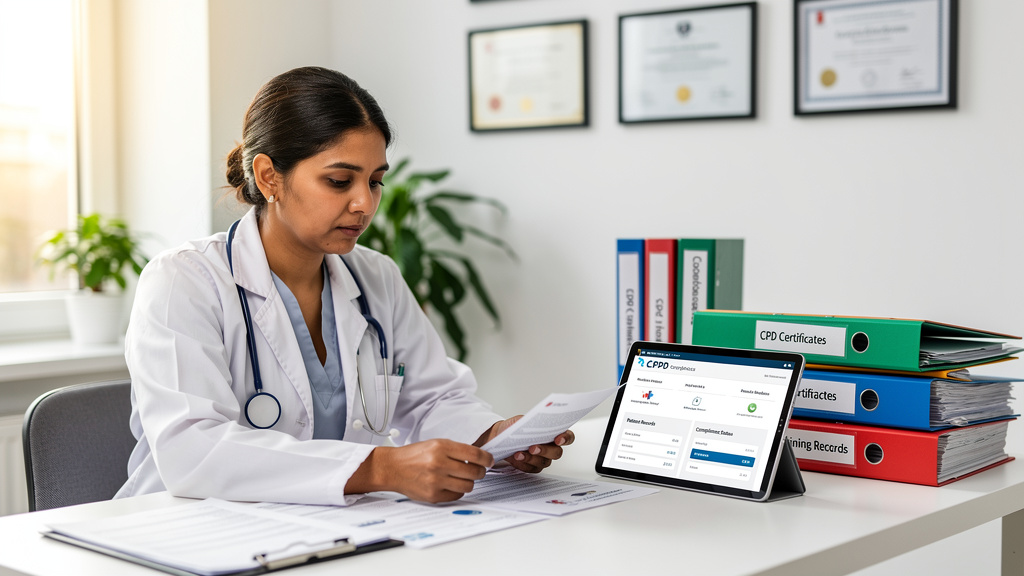
Once any form of AHPRA registration is granted, CPD stops being a future concern and becomes part of normal working life. Under the National Law, every registered medical practitioner must take part in ongoing professional development every year, with the 2025 Continuing Professional Development program establishing clear expectations for all registered doctors. This is not extra for high achievers; it is part of the basic requirement to keep a licence to practise.
Many IMGs are surprised to learn that CPD requirements apply even with limited or provisional registration, as long as that registration lasts more than four weeks in a period. The idea that CPD starts only after general registration leads some doctors into risky habits. From 2025 onward, the rules are clearer and more structured, so misunderstandings carry less room for excuse.
The 2025 CPD standard sets out both what you must do and how you must record it. It links CPD to real improvement in clinical practice, not just counting conference hours. This is where an AMA‑approved CPD Home, such as LearnMedicine, becomes central to safe and simple compliance.
The Medical Board of Australia stresses that continuing professional development is a core responsibility for every registered medical practitioner. Treat it as part of your clinical work, not as a side project.
The Four Core CPD Compliance Requirements
There are four main requirements IMGs need to keep in mind:
-
Join an AMC‑accredited CPD Home (unless you are in an exempt group). A CPD home is the organisation that tracks your activities, supports planning, and reports compliance if AHPRA asks. For most IMGs who are not in a college training program, this will be an independent CPD provider that matches their scope of practice.
-
Create a Professional Development Plan (PDP) at the start of each CPD year. This plan sets specific learning goals linked to the kind of work you do and the kind of work you want to move into. A good PDP covers medical knowledge, practical skills, communication, and system understanding.
-
Complete at least 50 hours of CPD activities each year. Those hours must be spread across education, reviewing performance, and measuring outcomes, not just lectures or online modules. The mix is designed so that doctors learn new information, reflect on their own practice, and check whether care is improving.
-
Log and declare your activities through your CPD home and at AHPRA renewal. That means keeping certificates, attendance records, and notes from case discussions. LearnMedicine makes this much easier by acting as both exam preparation hub and CPD Home, so many of the activities you already do for AMC Clinical or PESCI also count toward your annual CPD record.
Understanding the 50‑Hour CPD Framework
The 50‑hour CPD requirement is more than a time target; it is a structure for balanced learning. Instead of collecting random certificates near the end of the year, doctors are expected to plan a mix of education, feedback, and improvement work that relates to their real practice.
The core categories are:
-
Educational activities — minimum 12.5 hours per year
These are classic learning tasks such as reading journals, attending lectures, joining workshops, listening to clinical podcasts, or completing online modules. On LearnMedicine, our structured AMC Clinical and PESCI courses, as well as focused GP and hospital content, all sit in this category and are written with Australian practice in mind. -
Reviewing performance and measuring outcomes — 25 hours per year
Reviewing performance includes case discussions, peer review, and feedback from supervisors or patients. Measuring outcomes involves audits, looking at practice data, and reflecting on patient results. -
Flexible activities — 12.5 hours per year
These can come from any category. This gives you room to put more time into areas that matter most for your role, such as extra communication training, additional audits, or more in‑depth exam preparation.
CPD Requirements for IMGs: Specific Scenarios and Exemptions
IMGs with Limited or Provisional Registration (Non‑Specialist Pathway)
For IMGs on the Standard or Competent Authority pathways, CPD applies as soon as limited or provisional registration runs longer than four weeks in a registration period. Registration type by itself does not provide a free pass; once you are on the register and practising, CPD becomes part of your responsibility. The only broad exemption for this group is very short‑term registration under four weeks.
This can feel like a heavy load while also adjusting to a new system and sitting exams. That is why it makes sense to choose a CPD home that is friendly to IMGs and already aligned with your study needs. At LearnMedicine, the same clinical sessions, recall‑based cases, and communication practice that prepare you for AMC Clinical also count toward CPD, so you are not doing duplicate work just to meet a rule.
IMGs on the Specialist Pathway
IMGs on the Specialist Pathway usually have their CPD home chosen for them, because their specialist college manages both training and ongoing development. Participation in the college’s formal program, including teaching sessions, workplace assessments, and exams, is treated as meeting AHPRA’s CPD standard. Extra specialist requirements, such as particular audit types or advanced courses, still need to be met if the college lists them.
Doctors on the Expedited Specialist Pathway, including experienced GPs moving toward RACGP Fellowship, must still follow these college CPD rules. LearnMedicine supports this group through focused PESCI preparation and clinical reasoning practice that match RACGP expectations, while still fitting within the broader CPD framework.
Junior Doctors and Doctors in Training
For interns (PGY1), CPD is built into the supervised training year. Their daily teaching, rostered education sessions, and assessments are treated as CPD, so there is no extra 50‑hour target to meet on top of internship requirements. That means they do not need to join a separate CPD home.
PGY2 doctors who are in accredited training programs or supervised hospital or GP posts are also covered by their program, as long as it is recognised. However, PGY2 doctors working more independently, outside a structured training program, must join a CPD home and meet the 50‑hour standard. From PGY3 onward, any doctor who is not in a college training program is expected to enrol in an AMC‑accredited CPD home. Many IMGs enter Australia at PGY2 or PGY3 levels, so CPD often becomes relevant much sooner than they expect.
Doctors with Multiple Specialties or Scopes of Practice
Some doctors hold more than one fellowship or work across several scopes of practice. They can either:
-
complete full CPD programs for each of their specialist colleges, or
-
join a single CPD home that covers all the areas in which they work.
The key is to make sure any special high‑level requirements from each specialty are still included in the Professional Development Plan. A carefully chosen CPD home can make this far easier to manage year after year.
Building a Strategic Professional Development Plan

A Professional Development Plan (PDP) can feel like another form to fill out, but it can also be a clear map for your next few years. When used well, it links exam preparation, workplace learning, and long‑term goals into one page. For IMGs, a good PDP turns scattered tasks into a planned path toward stable practice in Australia.
As Dwight D. Eisenhower famously said, “Plans are nothing; planning is everything.” A PDP is less about the document and more about the thinking it forces you to do.
Assessing Your Current Position and Learning Needs
The first step is an honest look at where you stand now. That means naming:
-
your AHPRA pathway
-
your current registration status
-
your stage with AMC, PESCI, or college requirements
You also need to think about how your previous training and experience match Australian expectations, both clinically and in communication.
Then look at feedback you have already received. This might include:
-
mock exam results
-
supervisor comments
-
your own sense of which stations or cases feel shaky
Try to notice patterns, such as repeated difficulty with mental health consults, paediatrics, or ethical scenarios. LearnMedicine’s structured modules and live sessions are grouped by system and skill, which makes it easier to spot and fill these gaps.
Setting SMART Goals and Selecting Activities
Once you know your starting point, you can set SMART goals — specific, measurable, achievable, relevant, and time‑bound. Instead of saying “improve communication”, you might write:
-
“By June, complete ten simulated patient encounters that focus on shared decision‑making in chronic disease.”
Goals like this can be tracked and linked directly to CPD categories.
Your goals should cover both:
-
short‑term needs, such as passing AMC Clinical or a PESCI, and
-
longer‑term aims, such as moving into general practice or a particular hospital field.
When you choose activities, look for ones that tick more than one box at once. LearnMedicine’s recall‑based teaching, case discussions, and exam prep sessions all count toward educational activities and often toward reviewing performance. Building performance review and outcome measurement tasks into your year from the start also builds a habit of regular reflection.
Documenting and Reviewing Your Progress
A plan is only useful if it guides regular action, so tracking is vital. Keep clear records of every CPD activity, including:
-
dates
-
topics
-
time spent
-
any certificates or feedback
Log these promptly in your CPD home’s portal, rather than saving them for the end of the year when details are easy to forget.
Set times every quarter to review your PDP and adjust it. Ask whether the activities you have done have changed your clinical practice, and where you still feel uncertain. Feedback from supervisors, peers, and even patients can highlight areas to add into your next set of goals. LearnMedicine’s integrated tracking and regular live sessions make this review process straightforward, since your learning and your records sit in the same place.
Why LearnMedicine Is Your Ideal CPD Home as an IMG
Many CPD providers exist in Australia, but very few are built from the ground up for International Medical Graduates. LearnMedicine is one of a kind in this space. We combine AMA‑approved CPD activities with a platform designed around the real steps IMGs take, from MCQ study through to long‑term practice.
AMC Accreditation and IMG‑Specific Design
LearnMedicine is the only AMA‑approved learning provder that is focused entirely on IMGs. It means our CPD processes, record‑keeping, and educational quality are checked against national standards and accepted by AHPRA. This gives you confidence that every recorded hour on our platform counts toward your annual requirement.
Because we serve only IMGs, all of our content, teaching style, and support systems are shaped around common IMG challenges. We pay particular attention to the Australian health system structure, common primary care presentations, communication barriers, and culture. Our role is to remove guesswork about what “Australian standard” really means in teaching, assessment, and CPD activities. When you study with us, you do not have to keep translating local examples from an Australian‑trained perspective into your own context.
Comprehensive All‑Access Membership Value
Our all‑access membership brings every key part of the IMG path under one roof. You receive:
-
full AMC Clinical Exam preparation, including recall‑based teaching, simulated cases, and examiner‑style feedback
-
PESCI interview training that matches RACGP and IME expectations
-
CPD‑approved activities that align with the 2025 CPD framework
Structured clinical learning content on LearnMedicine is written to both prepare you for exams and count as CPD hours. Weekly live interactive sessions give you real‑time case discussions, communication practice, and chances to ask questions that matter to your daily work. Lifetime access to our Telegram community means you stay connected with peers across Australia, from first exam through to established practice, and can keep sharing cases and advice.
Beyond education, we support your career steps. Our team helps with CV and cover letter reviews, interview preparation, and job search strategies that reflect how Australian employers think. Because everything sits in one membership, you do not need to juggle separate platforms for exam prep, CPD logging, and career help.
Evidence‑Based Learning for Australian Practice Standards
Our teaching model focuses on clinical reasoning rather than memorising long lists of facts. Every case is built around how an Australian doctor would think, speak, and document in real primary care or hospital settings. This helps you pass exams and also feel confident with day‑to‑day patients once you start work.
We use simulation‑based learning with role‑play and simulated patients to build your communication skills. This includes:
-
breaking bad news
-
shared decision‑making
-
safety‑netting
-
explaining investigations
Cultural factors and patient expectations specific to Australia are always part of these sessions. Many of our activities sit in the educational activities, because they involve feedback and reflection. That way, you are not just meeting CPD rules; you are steadily improving the way you practise.
As one senior IMG supervisor often tells new arrivals, “If you treat every case discussion and simulation as if it were a real patient, your exams and CPD requirements almost take care of themselves.”
Common Challenges IMGs Face with AHPRA and CPD—And How We Help
Understanding Complex Requirements and Timelines
Most IMGs start by searching AHPRA, AMC, and college websites and quickly feel lost. Information sits in different places, uses technical language, and often assumes a background in Australian training. It can be hard to see:
-
which registration pathway fits you
-
what order the steps come in
-
how long each phase might take
CPD rules add another layer. Many online sources are outdated, and forum posts often mix older and newer standards. That makes it hard to know exactly when CPD applies and which activities count. At LearnMedicine, we bring this all together into simple, current, step‑by‑step guidance matched to your pathway and stage. Our teaching breaks big tasks into clear actions, and our IMG community shares real timelines and experiences that help you plan with more confidence.
Managing Time and Resources During the Transition
Plenty of IMGs are working full‑time, supporting family, and paying for exams and visas while trying to study and meet CPD rules. Time feels short, and both study and CPD can slip to the edge of a long day. Financial pressures add more stress, especially when paying for multiple courses and platforms.
We respond to this with an all‑access model that brings AMC Clinical preparation, PESCI support, CPD activities, and career guidance into one membership. You can watch recorded sessions when it suits your roster and join live classes when you can. Many of the tasks you already do with us, such as case discussions and reflection, count toward CPD, so you are not doubling your workload.
Adapting to Australian Clinical Practice Standards
Even very experienced IMGs often say that Australian clinical practice feels different from what they are used to. The medical science is the same, but consultation structures, documentation, referral habits, and communication can be new. Exams such as the AMC Clinical test not only knowledge but also whether you sound and act like a safe Australian practitioner.
We address this by focusing our content on common Australian presentations and expectations. Our simulated consults model how to structure an Australian GP or emergency department interaction from greeting to safety‑netting. We practise patient‑centred communication, including shared decision‑making and clear explanations of risk. This helps with both exam stations and daily practice, making it easier to adapt quickly in real clinics.
Building Professional Networks and Career Pathways
Isolation is a real issue for many IMGs, especially those without local classmates or senior mentors. It can be hard to find out which jobs are realistic, how to present a CV to Australian employers, and how to build referees who can speak to your work. Concerns about competing with locally trained doctors can add to this stress.
Our lifetime Telegram community connects you with IMGs at many stages, from those still overseas to others who now work as GPs or hospital doctors across Australia. We run structured sessions on CV writing, cover letters, and interview skills that reflect what employers actually want to see. Through this, we support you not only to pass exams but also to plan and progress a stable, satisfying career.
Practical Tips for CPD Success Throughout Your IMG Career
Start Early and Stay Organized
The best time to think about CPD is as soon as you receive any form of AHPRA registration. Joining a CPD home early makes the rules clear and stops surprises at renewal time. It also gives you a place to store activities from your first day on the register.
Set up a simple tracking method straight away, whether that is a spreadsheet or your CPD home’s portal. Record each activity as you complete it, with dates and time spent, so you are not trying to remember details later. Spread your CPD across the whole year by booking regular activities, such as:
-
monthly case discussions
-
quarterly audits or reflection exercises
-
scheduled online modules or workshops
Add reminders to review your PDP every few months. Treat CPD time like a rostered task, not an optional extra, and try to complete performance review and outcome activities earlier in the year, since they take more planning.
Integrate CPD with Your Daily Clinical Practice
The easiest CPD is the kind that grows directly from your day‑to‑day work. Supervised ward rounds, case discussions at handover, morbidity and mortality meetings, and teaching sessions often meet CPD definitions. When something challenging happens at work, such as a near miss or a complex diagnosis, you can turn it into a small audit or learning project.
Use downtime or commutes to complete online modules, listen to clinical podcasts, or review LearnMedicine cases that relate to patients you have recently seen. Join hospital grand rounds, journal clubs, and teaching sessions whenever you can, and record them carefully. Even a short but focused feedback discussion with a registrar or consultant can count as educational activity when you reflect on it. When you study for the AMC Clinical Exam with LearnMedicine, record that time within your CPD log so the same effort moves you toward exam success and compliance.
Use Technology and Community Resources
Technology can turn CPD from a scattered effort into a steady routine. On LearnMedicine, many of your exam preparation activities automatically produce CPD records within our platform. Live weekly sessions give you interactive learning that clearly fits reviewing performance and educational categories at the same time.
Stay active in our Telegram community by sharing cases, asking questions, and joining peer study groups. These interactions often count as CPD when they involve clinical discussion or reflection. Outside our platform, subscribe to high‑quality online journals or podcasts and use travel or exercise time for learning. Set phone reminders to log CPD right after you finish an activity. Joining special interest groups in your field, both within our community and through external organisations, adds networking that also supports your professional development plan.
Frequently Asked Questions About AHPRA Registration and CPD for IMGs
Do I Need to Complete CPD Requirements While I’m Still Preparing for the AMC Clinical Exam?
If you hold any AHPRA registration for more than four weeks in a period, including limited or provisional registration, CPD requirements apply. That means you cannot wait for general registration before taking CPD seriously. The good news is that many AMC Clinical study activities count as CPD when recorded correctly. On LearnMedicine, our clinical modules, simulated cases, and live teaching all align with the CPD categories. This lets you prepare for exams while building a strong CPD record and good habits from the start of your Australian medical career.
What Happens If I Don’t Meet the CPD Requirements?
CPD is a core registration standard, not an optional extra, so missed requirements are taken seriously. If AHPRA finds gaps in your CPD record, it can ask for an explanation, request extra documentation, or place conditions on your registration. In severe or repeated cases, registration can be suspended.
Random audits mean you should be ready to show CPD records when asked, and your CPD home may be contacted to confirm your activities. With a clear plan and a supportive CPD learning providers such as LearnMedicine, keeping up with CPD is very manageable, and our tracking tools help prevent accidental non‑compliance.
Can I Use Activities from My Home Country Toward My Australian CPD Requirements?
Yes, you can often count activities done overseas, as long as they are relevant to your current or intended scope of practice in Australia. International conferences, quality online courses, and serious journal reading can all be recorded if they support the kind of medicine you practise here. Your CPD home, such as LearnMedicine, helps you decide which activities fit and how to record them. The key is that what you learn should link to Australian guidelines, patient expectations, and clinical practice, not just to a different health system.
How Do I Choose the Right CPD Home for My Situation?
When picking a CPD home, look for:
-
AMC accreditation
-
alignment with your scope of practice
-
quality teaching and support
-
fair fees
For IMGs, it also matters that the provider understands overseas‑trained doctors and the specific hurdles they face. LearnMedicine stands apart as the only AMC‑accredited CPD Home created specifically for IMGs. We combine exam preparation, structured CPD activities across all categories, career guidance, and a supportive community in one place. This is often more efficient and more cost‑effective than paying multiple providers for separate services. A good CPD home should support every stage of your Australian practice, not just tick boxes for renewal.
I’m Working in a DPA Location—Do I Still Need to Meet CPD Requirements?
Yes, you must meet CPD requirements no matter where you practise. Distribution Priority Area (DPA) status affects Medicare provider numbers and where some GPs can work, but it does not change AHPRA’s national registration standards. Doctors in both city clinics and rural DPA centres have the same CPD obligations. LearnMedicine’s online model is especially helpful for regional or remote doctors who may have fewer local teaching events, since all you need is internet access to take part in our sessions and log your hours.
When Should I Start Thinking About CPD Requirements in My Registration Pathway?
It is wise to start learning about CPD requirements as soon as you begin planning your Australian registration pathway. Understanding CPD early helps you pick a CPD home that matches your goals and lets you connect exam preparation with CPD from the beginning.
Once you receive any AHPRA registration, you should join a CPD home without delay. When you link your LearnMedicine exam study to CPD logging straight away, you build a strong record over time instead of rushing near renewal dates. This early habit makes the move to general registration much smoother.
Conclusion
AHPRA registration and CPD rules can seem like a maze when first viewed from overseas. Pathways, exam requirements, supervision levels, and the 50‑hour CPD standard all interlock, and it is normal for IMGs to feel unsure about where to start. The good news is that thousands of doctors have already walked this path and shown that it is very achievable with the right information and support.
The core steps are clear:
-
understand which AHPRA pathway fits your background and where you stand within that pathway
-
recognise that CPD obligations often begin with limited or provisional registration, not only after general registration
-
join an appropriate AMC‑accredited CPD home early and build CPD into your normal study and work, rather than treating it as a late add‑on
When you do this, the 50‑hour CPD framework becomes a steady pattern of real learning instead of a yearly scramble.
LearnMedicine exists to make this process easier and safer for IMGs. As the AMA‑approved CPD learning provider designed especially for overseas‑trained doctors, we bring together AMC Clinical and PESCI preparation, structured CPD across all categories, career guidance, and a strong community. One membership gives you a single, clear base for exams, CPD logging, and long‑term skill development.

 Google