
What Is PESCI Australia? Complete Preparation Guide For IMGs
This LearnMedicine guide explains everything an International Medical Graduate (IMG) needs to know about the Pre‑Employment Structured Clinical Interview (PESCI) in Australia.
You will learn what PESCI Australia is, who needs it, how to book PESCI with different providers, what is assessed, and how to prepare methodically so you can approach your interview with confidence.
Section 1: Understanding The PESCI

1.1 What Is The PESCI?
1.1.1 Definition: Objective, Structured Clinical Interview
The Pre‑Employment Structured Clinical Interview (PESCI) is an objective, structured clinical interview. It is designed to test how you apply your knowledge and skills in realistic scenarios, not how many facts you can recall.
In PESCI, you are assessed against the requirements of a specific job. Scenarios and questions mirror the types of patients, presentations, and decisions you will face in that role.
1.1.2 Primary Purpose: Evaluating Suitability For A Specific Position
The primary purpose of the PESCI is to decide whether you are suitable for a particular medical position.
Assessors judge your:
-
Clinical knowledge and reasoning
-
Past experience and scope of practice
-
Professional behaviour and communication
-
Understanding of the Australian health system
They always interpret your performance against the demands of the actual job, including location, patient mix, and available supervision.
1.1.3 Role In Medical Board Of Australia (MBA) Registration Decisions
The PESCI outcome report is a mandatory component used by the Medical Board of Australia (MBA), supported by the Australian Health Practitioner Regulation Agency (AHPRA), when they decide on your application for provisional or limited registration.
The report:
-
States whether you are Suitable or Unsuitable for the nominated position
-
Recommends a supervision level (Level 1–4)
-
May include specific education or supervision recommendations
The Board considers this when deciding whether you can be registered for that role.
1.1.4 “Fitness‑For‑Task” Assessment Philosophy
PESCI Australia follows a “fitness‑for‑task” philosophy. The interview does not assess your general competence as a doctor in the abstract.
Instead, assessors ask:
“Can this doctor practise safely and effectively in this specific supervised job, in this particular setting, with the stated level of support?”
This is why your Position Description (PD), scope of practice, and supervision plan are so important.
1.1.5 Distinguishing PESCI From College Fellowship Exams
PESCI is very different from Australian college Fellowship exams:
-
PESCI
-
Position‑specific
-
Focused on safe supervised practice
-
One step in the registration process
-
-
Fellowship exams (e.g. RACGP, ACRRM)
-
Broad, advanced assessments
-
Test readiness for independent, unsupervised specialist practice
-
Lead to Fellowship and specialist recognition
-
Passing PESCI Australia does not mean you are ready for unsupervised specialist practice, but it can be an important stepping stone.
1.2 Who Needs A PESCI?
Knowing whether you must book PESCI is essential before you commit time and money.
1.2.1 IMGs On The Standard Pathway
IMGs on the Standard Pathway (AMC exams + supervised practice) usually require a PESCI if their first Australian job is in general practice, particularly in:
-
Distribution Priority Areas (DPA)
-
Area of Need (AoN) locations
If your initial role is a hospital non‑specialist position, a PESCI is generally not required.
1.2.2 IMGs On The Competent Authority Pathway
IMGs on the Competent Authority Pathway (e.g. graduates from the UK, Ireland, USA, Canada, New Zealand) may also need a PESCI when applying for limited or provisional registration in general practice.
Even with a recognised primary qualification and approved intern training, the Board still wants reassurance that you can safely manage Australian general practice patients in the proposed setting.
1.2.3 Focus On Provisional Or Limited Registration
The requirement for PESCI mainly affects doctors applying for:
-
Provisional registration in general practice posts, or
-
Limited registration (usually Area of Need or DPA) for GP roles
PESCI is rarely used for purely hospital‑based posts.
1.2.4 Situations Where PESCI Is Not Required
A PESCI is usually not required if you are:
-
On the Specialist Pathway with an Australian college assessing your comparability
-
On an expedited specialist pathway
-
Applying for a non‑specialist hospital role (depending on circumstances)
-
You already have general registration
In these pathways, your suitability is assessed mainly by the relevant specialist college or by the Board through other mechanisms.
1.3 The Importance Of The Specific Position Context
1.3.1 Assessment Matched To The Role
PESCI Australia is highly specific to the proposed job. Every interview is built around:
-
Your exact Position Description
-
The stated supervision and support
-
The clinical setting (urban, regional, rural, remote)
Scenarios are written to mirror the practice environment. For example, a rural GP role may include obstetric emergencies or after‑hours cases, whereas a metropolitan practice may focus more on chronic disease, mental health, or aged care.
1.3.2 How The Position Description Informs The Assessment
Your Position Description is one of the most influential documents in the whole process. Assessors use it to:
-
Design realistic clinical scenarios
-
Set expectations about your scope of practice
-
Gauge whether your past experience matches the job
If the PD is vague, generic, or unrealistic, it becomes much harder to demonstrate “fitness‑for‑task”. Working closely with your employer to produce a detailed PD is therefore essential.
1.3.3 Impact Of Practice Location On Expectations
Location strongly shapes PESCI expectations:
-
Rural/remote
-
Broader scope of practice
-
More responsibility for initial emergency care
-
Less on‑site specialist support
-
Greater reliance on retrieval services and telehealth
-
-
Metropolitan/regional
-
Often narrower scope, but high volume and complexity
-
Closer access to hospitals and specialists
-
Assessors consider all this when judging whether you can safely work in that exact setting under the proposed supervision.
“Context is not background noise in PESCI; it is part of the assessment itself.” — Common advice from experienced PESCI assessors
1.4 Key Bodies Involved In The PESCI Process
1.4.1 Medical Board Of Australia (MBA) / AHPRA
-
Role: The MBA is the national regulator. AHPRA provides administrative support.
-
The Board:
-
Sets registration standards and supervision levels
-
Requires a PESCI outcome for many GP posts
-
Uses the PESCI report when deciding whether to grant provisional or limited registration
-
1.4.2 Australian Medical Council (AMC)
-
Role: The AMC is the national standards body.
-
In the PESCI context, the AMC:
-
Accredits organisations that conduct PESCIs
-
Sets standards and guidelines for providers
-
Monitors quality and consistency of assessments
-
1.4.3 Accredited PESCI Providers
Currently accredited PESCI Australia providers are:
-
Royal Australian College of General Practitioners (RACGP)
-
Major provider for urban and regional GP roles
-
Publishes a detailed RACGP PESCI Handbook
-
-
Australian College of Rural and Remote Medicine (ACRRM)
-
Focuses on rural and remote GP and broad‑scope roles
-
Often includes hospital and emergency work in scenarios
-
Provides an ACRRM PESCI Handbook
-
-
Institute of Medical Education (IME / METC Institute)
-
Conducts PESCIs for a range of general practice posts
-
Also offers commercial preparation services and mock interviews
-
All providers follow AMC standards, but they differ in:
-
Typical practice settings they see
-
Fees and waiting times
-
Interview logistics (online vs face‑to‑face)
-
Detail of handbooks and candidate support
Choosing a provider aligned with your position type (e.g. ACRRM for rural AoN) can make your PESCI Australia experience more relevant.
Section 2: Eligibility And Application Process
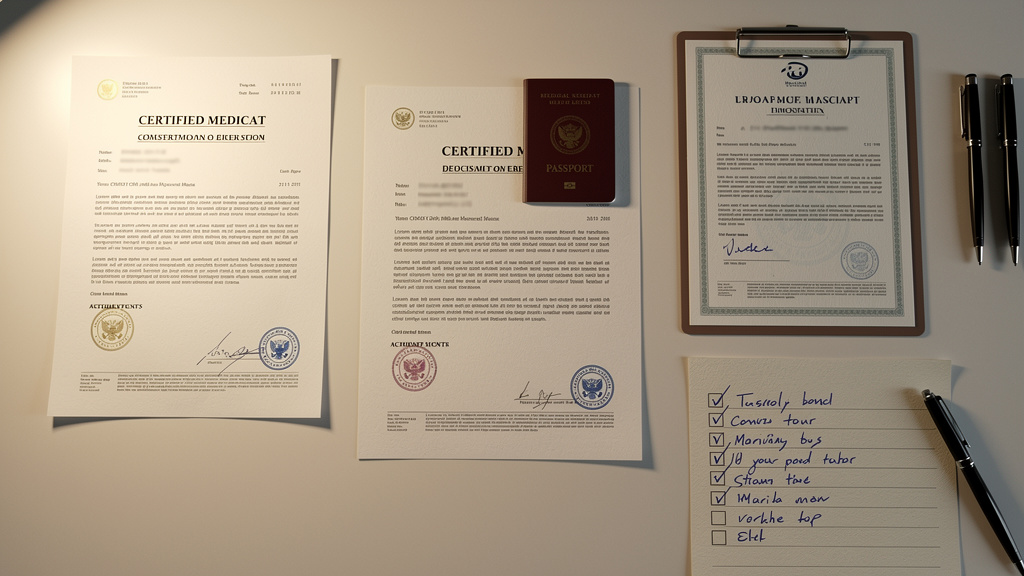
2.1 Core Eligibility Requirements
Before you book PESCI, you must be confident you can meet the underlying eligibility criteria. Otherwise, you risk paying the fee and preparing for an interview that you cannot use.
2.1.1 Primary Medical Qualification
You must hold a primary medical qualification from a medical school listed in the World Directory of Medical Schools (WDOMS) and recognised by the AMC.
Most providers will require:
-
A certified copy of your degree, and
-
Official transcripts from your medical school
2.1.2 Meeting MBA Requirements
You must also meet the MBA’s general registration standards, including:
-
English language proficiency (e.g. IELTS, OET, PTE Academic or equivalent)
-
Criminal history checks
-
Professional indemnity insurance (eventually, when practising)
-
Recency of practice requirements
If you cannot meet these standards, passing PESCI by itself will not be enough for registration.
2.1.3 AMC CAT MCQ Or Competent Authority Pathway Eligibility
Most applicants must either:
-
Have passed the AMC CAT MCQ exam (Standard Pathway), or
-
Be eligible via a Competent Authority Pathway
PESCI providers will ask for evidence of this as part of your application.
2.1.4 Valid Job Offer
A valid job offer in Australia is essential before you can book PESCI. The interview is always linked to:
-
One clearly defined employer
-
One specific location
-
One Position Description
Without that, providers cannot match the interview to the role, and the MBA cannot use the outcome.
2.2 Specific Experience Requirements
2.2.1 General Practice Experience
For PESCI Australia in general practice, especially in AoN or DPA roles, relevant GP or primary care experience is critical. The Board expects you to show that you have already:
-
Managed common primary care conditions
-
Worked with a broad range of age groups
-
Performed GP‑level procedures safely
This must be clearly documented in your CV and employer letters.
2.2.2 Defining “Full‑Time Equivalent (FTE) Experience”
For Area of Need general practice roles, IMGs typically require at least three years of FTE experience in general practice or a comparable primary care setting outside Australia.
FTE is usually based on:
-
Hours worked per week (often 38–40 hours as full‑time)
-
Number of weeks or years worked
Part‑time work is converted to FTE (e.g. two years at 0.5 FTE ≈ one year FTE).
2.2.3 Demonstrating Relevant Experience
You must show that your previous roles match the scope of the proposed Australian position. Strengthen your application by:
-
Listing detailed clinical duties, not just job titles
-
Highlighting volume and variety of cases
-
Including specific procedures and responsibilities
-
Matching your experience to the responsibilities listed in the PD
Clear, specific evidence is far more persuasive than vague descriptions.
2.2.4 AHPRA’s Recommendation For AoN General Practice Roles
If you are seeking limited registration for Area of Need in general practice, Ahpra often recommends:
-
Apply for registration with AHPRA first, before you book PESCI.
-
Allow the Board to formally assess whether you meet the 3‑year FTE GP/primary care requirement.
-
Only then proceed to PESCI if your experience is deemed sufficient.
This avoids spending money on a PESCI Australia interview you cannot use if your experience is inadequate.
If your experience has already been formally assessed as equivalent by RACGP or ACRRM (e.g. through a college experience assessment), you can submit that evidence with your registration application.
2.3 Choosing A PESCI Provider
2.3.1 Factors To Consider
When deciding where to book PESCI, consider:
-
Provider focus:
-
RACGP – urban/regional GP roles
-
ACRRM – rural/remote, broad‑scope roles, often with hospital work
-
IME – general practice roles across settings
-
-
Availability and waiting times
-
Fees and refund policies
-
Location and interview modality (online vs face‑to‑face)
-
How clear and supportive their candidate handbook is
Spending an hour upfront comparing providers can save weeks of delay later.
2.3.2 Aligning Provider Choice With Position Type
Generally:
-
For rural or remote posts, or roles with significant emergency or hospital work, ACRRM is often the best fit.
-
For urban or regional general practice, RACGP or IME are common.
-
If your employer has a strong preference or existing relationship with a provider, discuss this with them.
Always read the current provider handbook carefully before you book PESCI Australia with that organisation.
2.4 The Application Process Detailed
2.4.1 Initiation And Coordination With Employer
The PESCI application is usually a joint effort between you and your employer. Employers often:
-
Provide and complete parts of the Position Description
-
Help with details of supervision and support
-
Sign the Supervised Practice Plan (SPPA‑30), if required
Good communication with your employer at this stage reduces later problems.
2.4.2 Navigating The Online Portal
Each provider uses an online portal. Typical steps:
-
Create an account.
-
Complete detailed application forms.
-
Upload supporting documents.
-
Pay the PESCI fee.
-
Wait for confirmation that your application is complete.
Do not underestimate how long it can take to gather and certify all documents.
2.4.3 Understanding Application Timelines
Timelines vary but typically:
-
Application forms remain open for several months after fee payment (e.g. RACGP: 6 months).
-
Interviews are scheduled only once your application is marked complete.
-
Waiting times to the interview are often 1–3 months.
Factor this into your overall registration and relocation planning.
2.5 Comprehensive Documentation Checklist
Thorough documentation is essential. Many delays in PESCI Australia come from incomplete or incorrectly certified documents.
“If it’s not written down, it didn’t happen.” — Common reminder from senior clinicians about documentation
2.5.1 Essential Core Documents
-
Current passport bio‑page
-
Other proof of identity documents, if required
-
Official documentation for name changes (e.g. marriage certificate, deed poll)
All must usually be certified copies.
2.5.2 Academic And Professional Documents
-
Certified copy of primary medical degree
-
Certified academic transcripts
-
Evidence of passing AMC CAT MCQ or Competent Authority eligibility
-
Certified copies of current and past medical registration certificates (all jurisdictions)
2.5.3 Experience Documentation
-
A detailed, current Curriculum Vitae (CV) following the provider’s template
-
Clear listing of:
-
Position titles
-
Locations and dates (month/year)
-
Weekly hours and FTE
-
Detailed responsibilities and procedures
-
-
Letters of service or testimonials from employers confirming your duties and dates
2.5.4 Position‑Specific Documents
-
Fully completed Position Description for the role
-
Details of patient demographics, common conditions, procedures, after‑hours work, and resources
-
Summary of supervision arrangements and on‑site support
The PD must match reality. Overstating support or downplaying risks can harm your assessment.
2.5.5 Regulatory Documents
-
Signed PESCI Candidate Agreement/Declaration
-
Ahpra Supervised Practice Plan (SPPA‑30), if required
-
Any provider‑specific consent or declaration forms
2.5.6 Other Supporting Documents
Where available, include:
-
Results from bridging programs or preparation courses
-
Skills certificates (e.g. Advanced Life Support, Paediatric Life Support)
-
Reports from Australian clinical observerships
-
Certificates of CPD activities relevant to Australian general practice
These help demonstrate engagement with Australian practice and ongoing learning.
2.6 Tips For Preparing Accurate Documentation
2.6.1 Checking Accuracy And Completeness
-
Cross‑check all dates and positions across CV, registration history, and employer letters.
-
Make sure there are no unexplained gaps in employment history.
-
Confirm that names, spellings, and identifiers (e.g. registration numbers) are consistent.
Consistency helps assessors and avoids extra queries.
2.6.2 Importance Of Certified Copies
Most documents must be certified according to Ahpra’s guidelines. Common pitfalls include:
-
Using an ineligible certifier
-
Missing certifier details (name, qualification, registration number, signature, date)
-
Certifying photocopies of older certified copies rather than original documents
Follow the current Ahpra certification instructions carefully.
2.6.3 Preparing A Detailed Position Description
Work closely with your employer to produce a PD that:
-
Reflects the true complexity of the job
-
Lists procedures only if you are competent (and can demonstrate that)
-
Clearly outlines supervision structure and escalation pathways
Assessors will cross‑reference your PD with your CV and interview responses.
2.6.4 Common Documentation Pitfalls
Avoid:
-
Generic or copy‑paste PDs that do not match the actual job
-
CVs that are too brief or fail to list responsibilities
-
Missing certified copies
-
Uploading poor‑quality scans that are hard to read
Start this process early and use a checklist so nothing is missed.
Section 3: Assessment Domains – What Is Evaluated?

3.1 Structure Of The PESCI Interview
3.1.1 Number And Length Of Scenarios
Most PESCIs involve 4–5 clinical scenarios, each lasting about 10–15 minutes. Some providers may also include brief non‑clinical questions about professionalism or the Australian system.
3.1.2 Nature Of Scenarios
Scenarios are designed to see how you:
-
Take a focused history
-
Verbalise an appropriate physical examination
-
Formulate and justify differential diagnoses
-
Choose safe, evidence‑based investigations and treatment
-
Communicate with patients and colleagues
They are aligned with your PD and typical patient presentations in that practice.
3.1.3 Assessors And Environment
A PESCI Australia panel generally includes:
-
At least two experienced medical practitioners familiar with the role’s context
-
Sometimes an additional health professional or lay member, depending on provider policies
Interviews are usually conducted online (e.g. Zoom or similar platform), though some providers still offer face‑to‑face options. The environment is formal but designed to be fair and structured.
3.2 Deep Dive Into Assessment Domains
The PESCI assesses several domains to build an overall picture of your suitability for the proposed supervised position.
3.2.1 Clinical Reasoning
Assessors look for a systematic, safe approach, including:
-
Focused history and logical examination
-
Plausible and prioritised differentials
-
Appropriate and justified investigations
-
Safe, comprehensive management plans
-
Recognition and initial management of emergencies
-
Correct use of Australian guidelines and resources
-
Safe prescribing aligned with Australian practice and PBS
You should always explain why you are choosing a particular path.
3.2.2 Communication Skills
Key elements include:
-
Patient‑centred interviewing, including exploring the patient’s Ideas, Concerns, and Expectations (ICE)
-
Active listening and responding to cues
-
Explaining diagnoses and management in plain language
-
Checking understanding and gaining valid informed consent
-
Handling difficult conversations (e.g. bad news, anger, mental health, family conflict)
-
Clear, respectful communication with colleagues and the wider health team
Your tone, empathy, and respect are just as important as your words.
3.2.3 Cultural Competency
PESCI Australia places particular importance on cultural safety, especially for:
-
Aboriginal and Torres Strait Islander patients
-
Culturally and linguistically diverse communities
You must show:
-
Awareness of historical and social factors affecting health
-
Willingness to ask, not assume
-
Respect for beliefs, preferences, and values
-
Ability to identify and address barriers to care
Simple actions like asking about preferred terminology, involving family appropriately, or offering interpreter services can demonstrate cultural safety.
3.2.4 Professionalism And Ethics
Assessors expect behaviour consistent with Good Medical Practice: A Code of Conduct for Doctors in Australia, including:
-
Maintaining patient confidentiality and privacy
-
Being honest and transparent
-
Recognising your own limits and seeking help
-
Responding appropriately to potential complaints or incidents
-
Showing respect for colleagues, even in challenging situations
If you are unsure about a detail, it is better to say you would check a reliable source than to guess.
3.2.5 Physical Examination And Procedural Skills
You are not expected to physically examine a patient, but you must:
-
Verbalise a logical and relevant examination sequence
-
Emphasise key findings that would influence management
-
Describe steps of basic GP procedures if relevant (e.g. wound suturing, Implanon insertion)
-
Consider patient comfort, consent, and chaperone needs
This shows assessors how you would perform an examination in real practice.
3.2.6 Australian Healthcare System Context
You are assessed on your understanding of:
-
Structure of the Australian health system – primary care, public and private hospitals, community services
-
Referral pathways and when to involve specialists or emergency services
-
Preventive health priorities (e.g. immunisations, cancer screening)
-
Medicare, bulk‑billing, and practical realities of Australian GP practice
-
Responsibilities and limitations of working under supervision
Knowing how to manage a condition within the local system is as important as the clinical diagnosis itself.
3.2.7 Suitability For The Specific Position
Finally, the panel decides whether, overall, you are suitable for:
-
This exact role
-
At this location
-
Under the proposed supervision
They weigh your performance in all domains against the role’s risk, complexity, and support. This judgment forms the basis of the “Suitable/Unsuitable” outcome and supervision level recommendation.
3.3 Scoring And Outcome Determination
3.3.1 Assessment Criteria
Each provider uses structured marking guides aligned with AMC standards. Assessors score your performance in each domain and scenario, then discuss and agree on an overall view.
3.3.2 Overall Outcome
You receive a global outcome of:
-
“Suitable” – considered safe for the nominated role under the recommended level of supervision
-
“Unsuitable” – not yet safe for that particular role or level of responsibility
This outcome is specific to the position and does not automatically carry across to other jobs.
3.3.3 Supervision Level Recommendation
If you are “Suitable”, the report will recommend a supervision level:
-
Level 1: Direct, on‑site supervision at all times
-
Level 2: On‑site supervision most of the time; immediate support available
-
Level 3: Supervisor off‑site but readily contactable; regular case review
-
Level 4: Higher level of independence with periodic oversight
The MBA may adopt this level or choose stricter supervision depending on your broader history.
3.3.4 Summary Of Reasons
If the outcome is “Unsuitable”, you receive:
-
A summary of reasons
-
Identified areas where performance did not meet expectations
This feedback is valuable for planning remediation before you book PESCI again or apply for a different pathway.
Section 4: Comprehensive Preparation Strategies

Effective PESCI preparation is about developing safe, structured clinical habits in the Australian context. Random reading the week before you book PESCI will not be enough.
“By failing to prepare, you are preparing to fail.” — Benjamin Franklin
4.1 Developing A Structured Study Plan
4.1.1 Assessing Gaps
Start with an honest self‑assessment:
-
Clinical knowledge (especially common GP topics and emergencies)
-
Familiarity with Australian guidelines and prescribing
-
Communication skills, including ICE and cultural safety
-
Understanding of the Australian health system
Ask supervisors, mentors, or mock interviewers for honest feedback.
4.1.2 Setting Goals And Timelines
Create a clear plan:
-
Choose a realistic PESCI Australia date (often 6–12 weeks ahead).
-
Allocate time each week to specific domains or systems (e.g. cardiovascular, mental health).
-
Include time for practice, reading, and mock interviews.
Write your plan down and review it weekly.
4.1.3 Allocating Study Time
Prioritise:
-
Clinical reasoning and emergencies
-
Communication and cultural safety
-
Australian context
Avoid spending all your time reading guidelines without practising speaking out loud in a structured way.
4.2 Mastering Australian Clinical Guidelines And Resources
4.2.1 Identifying Key Guidelines
Key GP guidelines for PESCI Australia include:
-
RACGP “Red Book” (preventive activities)
-
National Heart Foundation guidelines
-
National cancer screening program resources
-
Diabetes and cardiovascular risk calculators (e.g. Australian Absolute CVD Risk Calculator)
Keep a list of websites and guideline PDFs you can refer to.
4.2.2 Using Australian Resources
Get comfortable using:
-
Australian Medicines Handbook (AMH) – drug choices, doses, contraindications
-
Therapeutic Guidelines (eTG) – evidence‑based management plans
-
Local referral directories and health district resources
During PESCI, mention that you would check AMH or eTG if you need to confirm a detail.
4.2.3 Focusing On Relevant Guidelines
Match your study to your PD:
-
If your practice sees many aged‑care residents, emphasise polypharmacy, falls, dementia, and advance care planning.
-
If your role includes paediatrics, focus on immunisations, common childhood infections, and developmental concerns.
-
For rural posts, include emergency stabilisation and retrieval processes.
4.2.4 Understanding Differences From Your Home Country
Reflect on:
-
Medications available in Australia vs your home country
-
Different thresholds for referral or admission
-
Legal and ethical frameworks (e.g. consent, child protection, driving and health)
Identify areas where your old habits might clash with Australian expectations and adjust accordingly.
4.3 Sharpening Clinical Reasoning
4.3.1 Practising Case‑Based Learning
Use case books, course materials, or online scenario banks to:
-
Practise from presentation to diagnosis and management
-
Verbalise your thoughts step‑by‑step
-
Focus on safety netting and follow‑up
Treat each case as if you are in the real interview.
4.3.2 Systematic Approach
For every scenario, follow a consistent pattern:
-
Clarify the problem and context.
-
Take a focused history, including red flags.
-
Verbalise examination.
-
List and prioritise differentials.
-
Justify investigations.
-
Outline immediate and long‑term management.
-
Explain safety netting and follow‑up.
This structure reassures assessors that you will not miss key steps.
4.3.3 Diagnosis And Risk Assessment
Always balance:
-
Most likely diagnoses, and
-
Serious “must not miss” diagnoses
Explain how your history and examination help you decide which conditions need urgent exclusion.
4.3.4 Justifying Choices
Instead of simply naming tests or medications, say:
-
“I would order X because I am concerned about Y and want to rule out Z.”
-
“Based on current Australian guidelines, first‑line therapy would be…”
This shows judgment rather than rote memorisation.
4.3.5 Avoiding A “Scattergun” Approach
Listing every possible diagnosis or test wastes time and suggests poor prioritisation. Be focused, logical, and willing to explain why you are not ordering unnecessary investigations.
4.4 Improving Communication Skills
4.4.1 Patient‑Centred Communication
Routinely include:
-
Open‑ended questions
-
Exploration of ICE
-
Summaries of what you have heard
-
Checking understanding and agreement
These skills are central to both PESCI and real‑world GP practice.
4.4.2 Eliciting ICE Efficiently
Practise questions like:
-
“What do you think might be going on?”
-
“What worries you most about this problem?”
-
“What are you hoping we can do today?”
Do this early in the consultation to guide your approach.
4.4.3 Explaining Clearly
Develop the habit of:
-
Avoiding jargon
-
Using simple analogies where appropriate
-
Asking the patient to repeat key points back in their own words
Assessors notice when your explanations are genuinely understandable.
4.4.4 Handling Sensitive Discussions
Prepare for scenarios involving:
-
Mental health and suicide risk
-
Domestic and family violence
-
Substance use
-
Sexual health
-
Child safety concerns
Know key Australian legal and safety obligations in these areas.
4.4.5 Communication Training
If you receive repeated feedback about communication, consider:
-
One‑to‑one coaching
-
Role‑play with peers or mentors
-
Workshops focused on difficult conversations
Strong communication can compensate for minor knowledge gaps; the reverse is rarely true.
“The best candidates are not the ones who know every fact, but the ones who can talk to patients safely and respectfully under pressure.” — Common observation from PESCI tutors
4.5 Building Cultural Competency
4.5.1 Aboriginal And Torres Strait Islander Health
Spend time learning about:
-
Historical context, including the impact of colonisation
-
Common health disparities (e.g. cardiovascular disease, diabetes, mental health)
-
Concepts of community, kinship, and connection to Country
-
Local Aboriginal Community Controlled Health Services (ACCHSs)
Be ready to demonstrate how you would provide culturally safe care.
4.5.2 Cultural Awareness Training
Free and paid cultural safety modules are available through various organisations and governments. Completing these:
-
Deepens understanding
-
Shows commitment to safe practice in Australia
-
Provides practical communication tips
4.5.3 Incorporating Cultural Safety Into Practice
During scenarios, consider:
-
Asking about cultural background and preferences
-
Offering interpreters when language may be a barrier
-
Involving family members appropriately, with patient consent
-
Being mindful of body language and non‑verbal communication
Explain these steps to assessors when discussing your management.
4.6 Preparing For The Specific Role And Location
4.6.1 Researching The Workplace
Before your PESCI Australia interview:
-
Visit the practice website.
-
Talk to your future supervisor.
-
Ask about typical appointments, patient mix, and common conditions.
-
Understand whether the role includes aged care, home visits, or hospital work.
Use this knowledge when answering scenarios.
4.6.2 Understanding Scope Of Practice
Be clear about:
-
What you are expected to do independently
-
What you must always discuss with your supervisor
-
What is outside your scope and should be referred
Verbalising these boundaries shows insight and professionalism.
4.6.3 Rural/Remote Challenges
If you are heading to a rural or remote role, prepare by learning about:
-
Local hospital facilities and limitations
-
Retrieval services (e.g. RFDS) and when to call them
-
After‑hours and on‑call expectations
-
The impact of distance and transport on patients’ ability to access care
Discussing these factors thoughtfully impresses assessors.
4.6.4 Discussing Expectations With Employer
Before you book PESCI, have at least one detailed discussion with your employer or supervisor about:
-
Supervision arrangements in the first weeks and months
-
How feedback will be given
-
How emergencies are handled
-
Support for further training and CPD
Use this understanding to frame your answers during the interview.
4.7 The Critical Role Of Mock Interviews
4.7.1 Why Mock Interviews Are Essential
Mock PESCIs are often the single most effective preparation tool. They allow you to:
-
Practise under pressure
-
Get used to speaking within 10–15 minute time frames
-
Receive targeted feedback
Many doctors who book PESCI only after several mock sessions report feeling significantly more confident.
4.7.2 Finding Experienced Interviewers
Look for:
-
Australian GPs experienced in teaching or assessment
-
Coaches who know RACGP, ACRRM, or IME PESCI formats
-
Preparation providers familiar with the latest guidelines
Ask how closely their mocks match real PESCI Australia interviews.
4.7.3 Mock Interview Structure
A good mock interview should:
-
Include 4–5 timed scenarios
-
Use cases relevant to your PD and provider
-
Provide immediate debrief after each case
-
Include written or verbal feedback on domains and time management
4.7.4 Using Detailed Feedback
Do not just collect feedback – act on it:
-
List recurring issues (e.g. missing red flags, weak safety netting).
-
Practise again focusing on those gaps.
-
Re‑test yourself with new scenarios.
Treat feedback as a roadmap, not criticism.
4.7.5 Tailoring Mocks
Ask your mock interviewer to:
-
Emphasise rural emergencies if you are going to a remote GP/hospital role.
-
Include more mental health or chronic disease if that fits your PD.
-
Use the provider’s marking domains explicitly.
The closer your practice is to the real thing, the more useful it is.
4.8 Using Practice Scenarios And Study Materials
4.8.1 Sourcing Quality Scenarios
Choose scenario banks that:
-
Are written for Australian general practice
-
Highlight red flags and common pitfalls
-
Include answers or discussion points
Be cautious with informal online groups; always cross‑check advice against guidelines.
4.8.2 Practising Under Timed Conditions
When you practise:
-
Set a timer for each case (10–15 minutes).
-
Verbalise your entire consultation and management plan.
-
Do not pause the timer to look things up – work with what you know.
This builds realistic stamina for the actual PESCI.
4.8.3 Analysing Performance
After each case, ask:
-
Did I miss any dangerous diagnoses?
-
Were my investigations appropriate and justified?
-
Did I explain the plan clearly and involve the patient?
-
Did I include safety netting and follow‑up?
Keep a learning log of common errors so you can track progress.
4.9 Addressing Common Pitfalls Proactively
4.9.1 Documentation Pitfalls
Avoid:
-
Rushing documentation at the last minute
-
Submitting uncertified documents
-
Overstating your skills in the PD
Small administrative errors can delay your ability to even book PESCI.
4.9.2 Australian Context
A common reason for an “Unsuitable” outcome is insufficient understanding of Australian:
-
Guidelines
-
Prescribing practices
-
Referral pathways
-
Legal responsibilities
Make the Australian context a specific part of your study plan.
4.9.3 Clinical Approach
Panel members often see:
-
Disorganised histories or examinations
-
Incomplete risk assessments
-
Over‑testing or under‑testing
Practise a clear structure and always think “safety first”.
4.9.4 Communication
Frequent issues include:
-
Speaking too fast or too quietly
-
Using jargon without checking understanding
-
Not exploring the patient’s ICE
-
Ignoring cultural cues
These are all areas you can improve with practice and feedback.
4.10 The Value Of Practical Experience
4.10.1 Prior Experience
Strong experience in primary care or GP‑style roles makes PESCI preparation easier because:
-
Common presentations feel familiar
-
You have real cases to draw on
-
You are more comfortable managing uncertainty
Use examples from your practice (without breaching confidentiality) to demonstrate insight.
4.10.2 Observerships Or Bridging Programs
Australian observerships or structured bridging programs can help you:
-
Understand clinic workflows and software
-
Observe communication styles and cultural nuances
-
Learn local referral pathways
They can also strengthen your CV and confidence before you book PESCI Australia.
Section 5: Practicalities And Logistics

5.1 Booking Your Interview
5.1.1 Coordination
Booking a PESCI involves three parties:
-
You (the candidate)
-
Your employer
-
The PESCI provider
Make sure everyone agrees on realistic dates and has submitted their parts of the documentation.
5.1.2 Scheduling Systems
Each provider manages scheduling differently, usually via:
-
Online booking calendars, or
-
Email offers of sessions after your application is approved
Respond quickly to booking emails to secure your preferred time.
5.1.3 Typical Waiting Times
Waiting times are usually 1–3 months after your application is marked complete. Plan backwards from any deadlines (e.g. job start date or visa timelines) so you book PESCI early enough.
5.2 Understanding And Managing Fees
5.2.1 Breakdown Of Fees
PESCI fees are significant, commonly around AUD $2,450–$2,500, depending on provider. Always check the current fee schedule on the provider’s website.
5.2.2 Payment Process
Most providers require:
-
Full payment before your application is processed or interview booked
-
Online payment via credit card or bank transfer
Your application will not proceed until payment is received.
5.2.3 Refund Policies
Refund and cancellation policies are often strict, with:
-
Limited or no refunds close to the interview date
-
Fees for rescheduling
Read these policies before you book PESCI so you understand the financial risk.
5.2.4 Employer Support
Some employers, especially in hard‑to‑recruit rural or Area of Need locations, may:
-
Pay the full PESCI fee
-
Reimburse part of the cost after you start
-
Provide study leave
Discuss this early in your contract negotiations.
5.3 Interview Format And Location
5.3.1 Modalities
Most PESCIs in Australia are currently:
-
Online via platforms such as Zoom or similar
-
Occasionally face‑to‑face (e.g. IME Gold Coast headquarters)
Confirm the exact format when you book.
5.3.2 Online Preparation
For online PESCIs:
-
Test your internet speed and stability
-
Use a good‑quality webcam and microphone
-
Choose a quiet, private, well‑lit space
-
Have a backup device or connection if possible
Treat the online environment as seriously as an in‑person interview.
5.3.3 In‑Person Logistics
For face‑to‑face interviews:
-
Book flights and accommodation well in advance
-
Allow extra time for travel delays
-
Plan how you will arrive calm and rested, not rushed
5.4 What To Expect On The Day
5.4.1 Check‑In
Arrive or log in early. You will usually:
-
Show identification
-
Confirm your details
-
Receive instructions about the interview structure
5.4.2 Interview Structure
You will be guided through:
-
A brief introduction
-
4–5 scenarios (each timed)
-
Short breaks between some cases
Listen carefully to scenario instructions before you start answering.
5.4.3 Managing Time
Watch the clock:
-
Aim to finish each case with at least 1–2 minutes for summary and safety netting.
-
Do not spend too long on history at the expense of management.
-
If you are running out of time, move to the most important points.
Good time management is a marker of safe clinical practice.
5.4.4 Between Scenarios
Use short breaks to:
-
Take a breath
-
Reset mentally
-
Let go of any previous mistakes and focus on the next case
Avoid over‑analysing earlier scenarios during the interview; it will distract you.
5.5 Tips For Performance On The Day
5.5.1 Managing Stress
To manage nerves:
-
Practise relaxation techniques in the week before
-
Sleep well the night before
-
Prepare your environment the day prior (tech checks, documents ready)
Some anxiety is normal; channel it into focus.
5.5.2 Communication
During the interview:
-
Speak clearly and at a steady pace
-
Use professional but warm language
-
Avoid arguing with assessors; treat their questions as prompts rather than challenges
5.5.3 Staying Focused
Concentrate on:
-
The patient’s main problem and safety issues
-
Red flags and risk assessment
-
Practical management within the local context
Do not be distracted by rare conditions unless they are clearly suggested.
5.5.4 Clarifying Questions
If any part of a scenario is unclear, it is appropriate to ask:
-
“Can I clarify whether…?”
-
“Is there access to…?”
This demonstrates thoroughness and avoids unsafe assumptions.
Section 6: Post‑PESCI Steps And Outcomes
6.1 Receiving Your Outcome
6.1.1 Communication
After your PESCI Australia interview:
-
The provider prepares a written report.
-
The report is sent directly to the MBA/Ahpra, usually within 14–21 business days.
-
You are notified of the outcome and may receive a copy or summary.
All PESCI attempts, including unsuccessful ones, are visible to Ahpra.
6.1.2 “Suitable” Or “Unsuitable”
The report states whether you are:
-
Suitable for the specific position, or
-
Unsuitable for that role at this time
This outcome is key for your registration application.
6.1.3 Supervision Level Interpretation
If you are suitable, the report will recommend a supervision level (1–4). The MBA then:
-
Considers this recommendation
-
May accept it or impose stricter supervision based on your wider history
Your eventual practice conditions must align with the approved level.
6.2 Validity And Transferability
6.2.1 Validity Period
Most providers consider a PESCI outcome valid for 12 months from the interview date. Ahpra may still consider older PESCIs, but may ask for additional evidence or a new PESCI, especially if:
-
You have not practised recently, or
-
Circumstances have changed significantly
6.2.2 Position‑Specific Nature
A PESCI outcome is position‑specific. It is tied to:
-
The particular PD
-
The specified location
-
The proposed supervision plan
It is not automatically usable for a different job.
6.2.3 When A New PESCI Might Be Required
You may need to book PESCI again if you:
-
Change to a substantially different role (e.g. urban to remote, clinic‑only to GP/hospital)
-
Change PESCI provider
-
Seek a significantly different supervision level
-
Allow more than 12 months to pass before registration for that role
In limited circumstances, Ahpra may consider an exemption if a new role is almost identical to the previous one; this is assessed case‑by‑case.
6.3 Next Steps If “Suitable”
6.3.1 Proceed With Ahpra Registration
Once you have a “Suitable” outcome:
-
Submit or complete your Ahpra application.
-
Attach the PESCI report and any other required documents.
Make sure your application is internally consistent with your PESCI information.
6.3.2 Finalise Supervision
Work with your supervisor and employer to:
-
Finalise the Supervised Practice Plan (SPPA‑30).
-
Address any PESCI recommendations (e.g. extra training in certain areas).
-
Agree on how feedback and reviews will occur.
6.3.3 Commence Practice
When:
-
Registration is granted, and
-
Supervision arrangements are approved
you can start practising in the assessed position under the agreed supervision level.
6.4 Next Steps If “Unsuitable”
6.4.1 Analysing Feedback
Take time to:
-
Read the report carefully.
-
Identify each domain where performance was below expectation.
-
Discuss the feedback with a trusted mentor or coach.
Avoid rushing to re‑book PESCI without understanding what needs to change.
6.4.2 Identifying Improvement Areas
Typical areas for improvement include:
-
Weak clinical reasoning or incomplete risk assessment
-
Limited familiarity with Australian guidelines
-
Communication or cultural safety gaps
-
Poor time management under pressure
Rank these issues and plan how you will address each.
6.4.3 Developing A Remediation Plan
A strong remediation plan could include:
-
Structured reading of key Australian guidelines
-
Additional mock PESCIs
-
Communication or cultural safety training
-
Observerships or supervised practice in relevant settings
Document your efforts so you can demonstrate improvement if you re‑apply.
6.4.4 Considering Re‑Application
If you intend to sit PESCI again:
-
Check provider rules on repeat attempts and waiting periods.
-
Decide whether to stay with the same provider or change (in discussion with your employer).
-
Only book PESCI once you and your mentors feel genuine progress has been made.
6.4.5 Appeals Process
Each provider has an appeals process, usually limited to:
-
Allegations of procedural error or unfairness
Appeals rarely change outcomes based on clinical judgment alone. Read the provider’s policy carefully before lodging an appeal.
6.4.6 Exploring Alternatives
If re‑application is not feasible or unsuccessful, you may need to:
-
Consider hospital‑based roles instead of general practice
-
Explore other registration pathways
-
Seek additional experience and training before trying again later
A single “Unsuitable” outcome does not end your career in Australia, but it does signal that further work is needed.
Section 7: Resources And Further Information
7.1 Official Resources
7.1.1 MBA/Ahpra Guidelines
Refer to:
-
Registration standards (e.g. English language, recency of practice)
-
“Supervised practice for international medical graduates” guidelines
-
Fact sheets on limited and provisional registration
These clarify how PESCI fits into the broader registration process.
7.1.2 AMC Website
The AMC website outlines:
-
Accreditation standards for PESCI providers
-
Lists of accredited organisations
-
Updates about changes to AMC or PESCI policies
7.1.3 PESCI Provider Handbooks
Each provider publishes detailed information about:
-
Eligibility
-
Interview structure and domains
-
Fees and refund policies
-
Application procedures
You should read the relevant handbook before you book PESCI with that provider.
7.1.4 Provider Application Portals
Use the online portals of:
-
RACGP
-
ACRRM
-
IME (METC Institute)
to submit applications, upload documents, and track your booking.
7.2 Preparation Course Providers
7.2.1 Overview
Several private organisations offer PESCI preparation and mock interviews, such as:
-
LearnMedicine
-
IMG SOS
-
MedicalReady Services
Engaging with a reputable provider can provide structure and expert feedback.
7.2.2 Services Offered
Common services include:
-
Scenario banks and written model answers
-
Small‑group or one‑to‑one mock interviews
-
Communication skills coaching
-
Australian guideline revision sessions
Check exactly what is included before enrolling.
7.2.3 Evaluating Providers
When choosing a course, consider:
-
Tutors’ experience in Australian general practice and assessment
-
Alignment with your PESCI provider (RACGP, ACRRM, IME)
-
Format (online vs face‑to‑face, group vs individual)
-
Cost and schedule
-
Feedback from previous participants
Avoid any provider that promises guaranteed outcomes.
7.3 Study Materials And Practice Tools
7.3.1 Recommended Resources
Useful materials include:
-
Official Australian guidelines and government health websites
-
Therapeutic Guidelines (eTG) – subscription required
-
Australian Medicines Handbook (AMH)
Pair reading with active scenario practice rather than reading alone.
7.3.2 Scenario Banks
Look for:
-
Australian‑focused GP scenarios
-
Cases with sample answers and reasoning
-
Timed scenario sets that mimic PESCI structure
Use them to practise under exam‑like conditions.
7.3.3 Course Materials
If you enrol in a course:
-
Review recordings and notes multiple times.
-
Re‑do scenarios after receiving feedback.
-
Build your own “high‑yield” summary notes from course content.
7.4 Community And Peer Support
7.4.1 Online Forums
Online IMG and GP forums can offer:
-
Peer support and motivation
-
Shared experiences with different PESCI providers
However, always verify clinical or regulatory advice against official sources.
7.4.2 Study Groups
Forming a small PESCI study group can help you:
-
Practise role‑plays
-
Share resources and notes
-
Keep each other accountable
Agree on ground rules for constructive, respectful feedback.
7.5 Table Of Key Bodies And Roles
|
Key Body |
Role In PESCI Process |
|---|---|
|
Medical Board of Australia |
Requires PESCI outcome, uses report for registration decisions |
|
AHPRA |
Provides administrative support to the MBA, oversees registration process |
|
Australian Medical Council |
Accredits PESCI providers, sets accreditation standards |
|
RACGP |
Accredited provider, conducts PESCIs, publishes handbook and resources |
|
ACRRM |
Accredited provider, conducts PESCIs, publishes handbook and resources |
|
IME (METC Institute) |
Accredited provider, conducts PESCIs, offers preparation/mock interviews |
Section 8: When And How To Book PESCI In Australia
This section brings together timing advice and a practical checklist to help you decide when to book PESCI and how to avoid common booking mistakes.
8.1 When Should You Book PESCI Australia?
In most situations, it is sensible to:
-
Confirm you meet core eligibility (degree, AMC/Competent Authority, English).
-
Secure a written job offer and agree on a clear Position Description.
-
Gather most of your documents.
-
Then book PESCI with your preferred provider.
Important exception – Area Of Need GP roles:
For AoN general practice, the MBA recommends you apply for registration first, so the Board can confirm you meet the 3‑year FTE GP experience requirement. Only after that should you book PESCI.
8.2 Pre‑Booking Checklist
Before you log in to a portal to book PESCI Australia, check that you:
-
Have a signed or clearly documented job offer
-
Understand your role, scope, and location
-
Have drafted a detailed Position Description with your employer
-
Have most documents already certified (degree, transcripts, registrations, identity)
-
Have selected the most appropriate provider (RACGP, ACRRM, or IME)
-
Have read the current provider handbook
-
Have the fee funds available and understand refund rules
Completing this checklist reduces stress and the risk of needing to reschedule.
8.3 Step‑By‑Step Booking Process
-
Choose a provider aligned with your job type.
-
Create an online account on the provider’s portal.
-
Complete application forms carefully, matching details with your CV and PD.
-
Upload certified documents in the required formats.
-
Pay the PESCI fee according to the provider’s instructions.
-
Wait for confirmation that your application is complete.
-
Select an interview slot from available options, or respond promptly when the provider contacts you.
-
Confirm logistics (online link, time zone, ID requirements).
Once you have a confirmed date, adjust your study plan so you peak in the final 2–3 weeks before the interview.
Section 9: Sample 6–8 Week Study Plan For PESCI Australia
This flexible plan shows how you might structure preparation after you book PESCI. Adjust timing based on your experience and availability.
9.1 Weeks 1–2: Orientation And Foundations
-
Read your provider’s PESCI handbook in full.
-
Review your Position Description line by line.
-
Map out common conditions and scenarios likely for your role.
-
Start reviewing Australian guidelines for:
-
Hypertension, diabetes, lipid management
-
Chest pain, shortness of breath, abdominal pain
-
Depression, anxiety, suicide risk
-
-
Do 3–5 simple practice cases each week to get used to speaking out loud.
9.2 Weeks 3–4: Systematic Case Practice
-
Increase to 1–2 timed scenarios per day (10–15 minutes each).
-
Focus on consolidating a consistent structure for history, exam, and management.
-
Deepen knowledge of:
-
Cancer screening and preventive care
-
Child and women’s health
-
Common emergencies relevant to your post (e.g. asthma exacerbation, chest pain, sepsis)
-
-
Start incorporating cultural safety and ICE explicitly into your answers.
9.3 Weeks 5–6: Mock Interviews And Refinement
-
Schedule at least one full mock PESCI with an experienced coach or peer panel.
-
After each mock, list 3–5 key improvement areas and plan targeted practice.
-
Tidy up gaps in Australian health system knowledge (Medicare, referrals, local resources).
-
Review past cases where you struggled and re‑do them with improvements.
If your PESCI is at 8 weeks, use this period as the peak of intense practice.
9.4 Final 1–2 Weeks: Polishing And Rest
-
Reduce heavy new study; focus on:
-
Light revision of key guidelines
-
Short, focused practice scenarios
-
Relaxation and mental preparation
-
-
Prepare your interview environment (for online PESCIs).
-
Confirm time, date, and tech set‑up 48 hours before.
Aim to arrive at interview day rested, organised, and confident in your structured approach.
Section 10: Frequently Asked Questions About PESCI Australia
10.1 Do I Need PESCI For A Hospital Job?
No. PESCI is mainly required for:
-
General practice roles under limited or provisional registration
Non‑specialist hospital positions do not require PESCI.
10.2 How Many Times Can I Sit PESCI?
There is no universal national limit, but:
-
Each provider has its own policies on repeat attempts and waiting periods
-
AHPRA will see all your PESCI outcomes and may become concerned after multiple failures
If you fail once, invest heavily in remediation before you book PESCI again.
10.3 Does Failing PESCI Affect My Future Registration?
An “Unsuitable” outcome:
-
Does not automatically end your chances of practising in Australia
-
Will, however, be considered by the MBA in future applications
Demonstrating how you have addressed previous feedback is essential in any re‑application.
10.4 Can I Use One PESCI Outcome For A Different Job?
In general, no. PESCI Australia outcomes are:
-
Position‑specific
-
Based on a particular PD and supervision plan
In some cases, Ahpra may consider a request to treat an outcome as valid for a very similar role, but this is not guaranteed and must be justified formally.
10.5 Is PESCI Harder With Some Providers Than Others?
All accredited providers follow AMC standards, so:
-
The level of expectation should be equivalent.
-
The style and focus of scenarios can differ (e.g. more rural emergencies with ACRRM).
Choose a provider that best fits your job type, and match your preparation accordingly rather than worrying about which is “harder”.
10.6 How Early Should I Book PESCI Before My Job Start Date?
Given documentation and waiting times, many IMGs:
-
Start serious preparation 2–3 months before their hoped‑for interview
-
Book PESCI at least 3–4 months before the planned job start date
This allows time for the interview, report writing, registration processing, and any unexpected delays.
Appendix
Appendix A: Sample Position Description Template Guidance
A detailed Position Description (PD) is very important as it defines the scope of practice for which you are being assessed. It must be specific to the role offered by your employer. Use the template provided by your chosen PESCI provider, but ensure it is completed comprehensively and accurately reflects reality.
Key Sections To Detail:
-
General Information:
-
Position Title: Specific (e.g. General Practitioner, Medical Officer).
-
Location: Full address, including State/Territory. Specify if rural/remote.
-
Employing Entity: Name of clinic/hospital/service.
-
Type Of Practice: (e.g. Private General Practice, Aboriginal Medical Service, Rural Hospital with GP role).
-
Full‑Time Equivalent (FTE): State hours per week and contract duration.
-
-
Reporting Structure:
-
Your direct supervisor(s): Names, qualifications, Ahpra registration numbers.
-
Other senior medical staff and their roles.
-
-
Scope Of Practice And Clinical Responsibilities:
Be specific. List:-
Types of patients you will see (e.g. all age groups, chronic conditions like diabetes, heart disease, mental health, antenatal care, minor procedures).
-
Common presentations expected (e.g. acute respiratory infections, chronic disease exacerbations, minor injuries, preventive health checks).
-
Specific procedures you will be expected to perform (e.g. wound care, suturing, skin biopsies, insertion of Implanon, minor surgical procedures). Only list procedures you are competent in and that are within the scope of this supervised role.
-
After‑hours or on‑call duties (if any), including nature and frequency.
-
-
Available Resources And Support:
-
Medical staff available: Number of GPs, specialists, other doctors, their expertise.
-
Nursing staff: Number, qualifications (RNs, ENs), specific skills (e.g. chronic disease management, immunisation).
-
Allied health support: Access to physiotherapy, psychology, dietetics, podiatry, etc., on‑site or via referral.
-
Administrative support: Receptionists, practice managers.
-
Equipment and facilities: Consulting rooms, treatment room facilities, diagnostic equipment (ECG, spirometry), pathology and radiology access (on‑site or local).
-
Hospital access: If working in a rural hospital setting, detail facilities, available specialties, and your expected role.
-
Access to guidelines/resources: Availability of eTG, therapeutic guidelines, internet access.
-
Emergency support: Proximity to the nearest hospital with higher‑level care, availability of retrieval services (e.g. RFDS).
-
-
Supervision Arrangements:
-
Outline the proposed supervision plan (referencing the SPPA‑30).
-
Frequency of formal supervision meetings.
-
How direct supervision will be provided initially (Level 1/2).
-
How informal support/case discussion will occur.
-
Availability of supervisors (on‑site, via phone/video).
-
Arrangements for supervisor leave/absence.
-
-
Practice Management Software:
-
Specify the software used (e.g. MedicalDirector, Best Practice). Experience with specific software may be beneficial but is not always mandatory if training is provided.
-
Guidance:
-
Be Realistic: The PD should accurately reflect the actual demands and resources of the position. Exaggerating scope or available support can negatively affect the assessment.
-
Employer Collaboration: Complete this document in close collaboration with your employer and proposed supervisor.
-
Specificity Is Key: Generic statements are unhelpful. Quantify resources where possible (e.g. “Access to three full‑time GPs on site,” “Weekly case discussion meeting,” “Pathology collection centre 5 minutes away”).
-
Link Experience To Role: While not part of the template itself, be ready during PESCI to explain how your prior experience aligns with the responsibilities listed in the PD.
Appendix B: Detailed Comparison Of Accredited PESCI Providers
|
Feature |
RACGP PESCI |
ACRRM PESCI |
IME (METC Institute) PESCI |
|---|---|---|---|
|
Primary Focus |
General practice roles |
Rural and remote general practice; broad‑scope roles |
General practice roles |
|
Typical Role Alignment |
Urban/regional GP positions, standard primary care |
Rural/remote GP positions often with hospital duties |
GP roles across a range of locations |
|
Assessment Structure |
Typically 4–5 scenarios (10–15 mins each) |
Similar, often with rural/remote‑specific scenarios |
Similar, structured interview |
|
Scenario Content |
Common GP presentations in Australian context |
Rural/remote presentations, emergencies, limited resources scenarios |
Common GP presentations in Australian context |
|
Handbook |
“RACGP PESCI Handbook” |
“ACRRM PESCI Handbook” |
Information available on IME website |
|
Approximate Fees |
~AUD $2,450 (check current fees) |
~AUD $2,500 (check current fees) |
~AUD $2,500 (check current fees) |
|
Application Process |
Online portal |
Online portal |
Online portal |
|
Typical Waiting Time |
Often 1–3 months |
Similar, sometimes slightly longer |
Variable |
|
Documentation |
RACGP CV template, detailed PD |
ACRRM CV template, detailed PD |
Detailed CV and PD |
|
Format |
Mostly online |
Mostly online |
Face‑to‑face Gold Coast or virtual |
|
Re‑Application |
Policies in handbook |
Policies in handbook |
Policies in handbook |
Always confirm details on the provider’s official website before you book PESCI.
Appendix C: Example PESCI Scenario And Structured Approach
Example Scenario:
You are working as a Medical Officer in a regional general practice. Your next patient is Ms Evelyn Reed, a 68‑year‑old female who presents today reporting a 3‑month history of progressive fatigue and shortness of breath on exertion. She also mentions some intermittent dizziness. She has a past history of hypertension controlled with medication, and osteoarthritis. She is a non‑smoker. How would you approach this presentation? (Time: 12 minutes)
Structured Approach To Answering A PESCI Scenario:
Aim for a logical flow, verbalising your reasoning clearly.
-
Initial Approach (1–2 mins):
-
Acknowledge the scenario and time limit.
-
State initial differential diagnoses (e.g. cardiac, respiratory, anaemia, endocrine, malignancy).
-
Outline your plan: history → examination → investigations → management.
-
-
History Taking (4–5 mins):
-
Use open questions, then focused questions.
-
Explore shortness of breath (onset, progression, triggers, severity, functional impact).
-
Characterise fatigue and associated features (e.g. weight loss, fevers, night sweats).
-
Clarify dizziness (vertigo vs presyncope, frequency, triggers, associated symptoms).
-
Review systems: chest pain, palpitations, cough, sputum, ankle swelling, neurological symptoms, bowel/urinary changes.
-
Past medical history: hypertension control, other conditions, surgeries, allergies.
-
Medications: all current drugs and supplements, dose, adherence, possible side effects.
-
Social history: alcohol, occupation, exercise, supports, falls risk.
-
Family history: cardiac disease, anaemia, cancers.
-
ICE: “What do you think is going on?”, “What worries you most?”, “What are you hoping we can do today?”
-
Verbalise red flags you are watching for.
-
-
Physical Examination (1–2 mins):
-
General inspection (pallor, respiratory distress, weight loss).
-
Vital signs (HR, BP, RR, SpO₂, temperature).
-
Cardiovascular exam (heart sounds, murmurs, JVP, peripheral oedema).
-
Respiratory exam (breath sounds, crackles, wheeze).
-
Abdominal exam (organomegaly).
-
Peripheral examination (conjunctival pallor, clubbing, cyanosis, lymph nodes).
-
-
Investigations (1–2 mins):
-
Initial: FBC (for anaemia), iron studies, EUC, LFTs, TFTs, blood glucose, CRP/ESR, chest X‑ray, ECG.
-
Depending on findings: BNP, echocardiogram, pulmonary function tests, D‑dimer, endoscopy/colonoscopy if GI blood loss suspected.
-
State where tests will be performed (local pathology, imaging providers).
-
-
Management Plan (2–3 mins):
-
Immediate: Assess severity; if unstable, arrange urgent hospital transfer.
-
For stable patients: explain likely causes, arrange investigations, and plan follow‑up.
-
Provide safety netting: clear instructions about when to seek urgent help (e.g. sudden worsening shortness of breath, chest pain, syncope).
-
Address lifestyle advice and medication review.
-
Discuss possible need for specialist referrals once results are available.
-
Document thoroughly.
-
-
Professionalism/Communication:
-
Maintain empathy, avoid jargon, and check understanding.
-
Demonstrate cultural sensitivity if relevant.
-
Acknowledge limits and mention checking AMH or eTG for precise dosing if needed.
-
Key Points For Success:
-
Use a clear structure.
-
Prioritise serious conditions.
-
Think aloud so assessors can follow your reasoning.
-
Justify decisions with guidelines.
-
Always include safety netting and follow‑up.
-
Show awareness of the Australian context.
-
Manage time effectively.
Appendix D: Glossary Of Key Terms And Acronyms
|
Term/Acronym |
Full Form |
Definition In PESCI Context |
|---|---|---|
|
AHPRA |
Australian Health Practitioner Regulation Agency |
Provides administrative support to the MBA and oversees registration. |
|
ACRRM |
Australian College of Rural and Remote Medicine |
PESCI provider focused on rural and remote practice. |
|
AMC |
Australian Medical Council |
Accredits PESCI providers and sets standards. |
|
Area Of Need (AoN) |
Area of Need |
Classification for areas with insufficient medical practitioners. |
|
CAT MCQ |
Computer Adaptive Test Multiple Choice Questionnaire |
AMC exam often required before PESCI. |
|
DPA |
Distribution Priority Area |
Classification for areas with GP shortages. |
|
eTG |
Electronic Therapeutic Guidelines |
Online Australian treatment guidelines (subscription). |
|
FTE |
Full‑Time Equivalent |
Measure of workload used to quantify required experience. |
|
ICE |
Ideas, Concerns, Expectations |
Framework for understanding a patient’s perspective. |
|
IMG |
International Medical Graduate |
Doctor with a primary qualification from outside Australia or NZ. |
|
IME |
Institute of Medical Education |
Accredited PESCI provider. |
|
MBA |
Medical Board of Australia |
Registers doctors and requires PESCI outcomes for some roles. |
|
PESCI |
Pre‑Employment Structured Clinical Interview |
Interview assessing suitability for a specific supervised role. |
|
PBS |
Pharmaceutical Benefits Scheme |
Australian government scheme subsidising prescription medicines. |
|
RACGP |
Royal Australian College of General Practitioners |
Major PESCI provider for GP roles. |
|
SPPA‑30 |
Supervised Practice Plan Application (Form 30) |
Ahpra form describing supervision arrangements. |
|
Standard Pathway |
Standard Pathway |
Pathway to general registration via AMC exams and supervised practice. |
|
WDOMS |
World Directory of Medical Schools |
Database used by AMC to verify medical schools. |


 Google