
Introduction
The first time many overseas doctors hear the phrase “what is AHPRA”, it often comes as a surprise from a recruiter or a friend who already works in Australia. One moment the focus is on exams and job ads, and the next it becomes clear that none of that matters without AHPRA registration. It can feel like there is a guarded gate between current practice and an Australian medical career.
For International Medical Graduates (IMGs), AHPRA and the National Registration and Accreditation Scheme (NRAS) can look confusing and even a bit intimidating. There are new laws, unfamiliar terms, several pathways, and many forms. On top of this, exam preparation, visa planning, and family responsibilities are happening at the same time, so it is easy to feel lost.
In simple terms, AHPRA is the national body that decides who is allowed to practise as a doctor in Australia and under what conditions. Understanding what is AHPRA and how it works is not just “paperwork knowledge”. It shapes visa options, exam timing, when to apply for jobs, and how fast someone can move from limited registration to independent practice.
In this guide, we walk through AHPRA step by step as fellow doctors and educators at LearnMedicine, not as lawyers. By the end, we will have covered AHPRA’s role, the National Scheme, registration pathways, registration types, the application process, ongoing obligations, and common mistakes. The aim is to replace fear and guesswork with a clear, practical map that helps turn “what is AHPRA” from a source of stress into a system that can be navigated with confidence.
“Think of AHPRA as the rulebook and scoreboard for your Australian career. Once you understand the rules, the process stops feeling mysterious and starts feeling manageable.”
— LearnMedicine Faculty
Key Takeaways
-
AHPRA is the Australian Health Practitioner Regulation Agency. It manages registration for 16 regulated health professions, including medicine, across every state and territory. For doctors, it works closely with the Medical Board of Australia, which sets standards and makes registration decisions.
-
Registration with AHPRA is a legal requirement for practising as a doctor in Australia. Working without appropriate registration is a criminal offence, can lead to prosecution, and can seriously damage any chance of future registration.
-
There are three main registration pathways for IMGs: the Competent Authority Pathway, the Standard Pathway, and the Specialist Pathway. Each pathway has strict eligibility rules, different assessments, and different timelines, so choosing the right one early saves a lot of time and money.
-
The AHPRA process usually involves primary source verification of medical degrees, proof of English language skills, AMC exams for Standard Pathway candidates, an approved supervised job, and a detailed application with correctly certified documents. Knowing this sequence helps avoid long delays.
-
AHPRA offers several registration types, including Provisional, Limited, General, Specialist, and Non‑Practising registration. Each type has its own scope of practice, supervision levels, and role in a doctor’s career.
-
Once registered, doctors must renew every year, complete mandatory CPD hours, hold professional indemnity insurance, follow the Medical Board’s code of conduct, and keep their details up to date. Ignoring these duties can lead to conditions, suspension, or loss of registration.
-
At LearnMedicine, we focus on helping IMGs with exam preparation, PESCI training, pathway selection, AHPRA‑friendly CVs and cover letters, and CPD accredited via AMA CPD Home. Our aim is to make “what is AHPRA” and the entire registration process more structured, predictable, and manageable.
Understanding AHPRA: Australia’s National Health Regulator

To understand what is AHPRA, it helps to start with its full name. AHPRA stands for the Australian Health Practitioner Regulation Agency. It is the national agency that runs the registration and accreditation system for health practitioners across all states and territories in Australia.
AHPRA’s main purpose is protection of the public. It does this by making sure only doctors and other health professionals who are properly trained, competent, and safe are allowed to register and practise. Before a doctor appears on the register, AHPRA checks qualifications, English language skills, work history, and any past disciplinary issues.
AHPRA does not work alone. It partners with 15 National Boards, one for each profession or group of professions. For doctors, the key partner is the Medical Board of Australia. AHPRA manages the processes, files, and investigations, while the Medical Board sets professional standards, registration rules, and makes the final decisions.
The legal power for AHPRA comes from the Health Practitioner Regulation National Law, which has been adopted by each state and territory. Before 2010, each state had its own medical board and its own rules. The National Law brought these together into one national system, with AHPRA as the central agency. For an IMG, knowing what is AHPRA means understanding that this single agency links registration, exams, supervised practice, and ongoing obligations across the whole country.
“Public safety is at the heart of the National Scheme. Registration standards are designed to protect the public and guide practitioners.”
— Adapted From AHPRA And National Board Publications
The National Registration And Accreditation Scheme (NRAS) Explained
The National Registration and Accreditation Scheme (NRAS), often shortened to the National Scheme, is the framework that AHPRA and the National Boards use to regulate health practitioners. It replaces the old patchwork of separate state systems with one coordinated national approach.
The National Scheme has four main goals:
-
Protect the public by making sure only safe and qualified practitioners are registered
-
Support high‑quality education and training for health professionals
-
Allow workforce mobility so a doctor can work across different states with a single registration
-
Encourage ongoing improvement in the quality of health services
Under this scheme, 16 health professions are regulated. These include Aboriginal and Torres Strait Islander Health Practice, Chinese Medicine, Chiropractic, Dental professions, Medical, Medical Radiation Practice, Nursing and Midwifery, Occupational Therapy, Optometry, Osteopathy, Paramedicine, Pharmacy, Physiotherapy, Podiatry, and Psychology. The Health profession demographic snapshot reports provide detailed breakdowns of practitioner numbers, demographics, and workforce trends across each of these professions. All of them fit under the same law, but each has its own National Board.
For doctors, the National Scheme means that AHPRA registration with the Medical Board allows practice anywhere in Australia with a single registration. Standards are nationally consistent, though hospital credentialing and employer expectations may still vary. When an IMG asks what is AHPRA doing in their case, the answer is that it is applying this national framework in a way that matches the doctor’s pathway and registration type.
AHPRA’s Core Regulatory Functions And Responsibilities
AHPRA carries many day‑to‑day tasks that affect every doctor’s career, from the first application to retirement. Understanding these functions helps explain why the paperwork is so detailed and why timing matters.
Key functions include:
-
Registration management – receiving and assessing applications from new graduates, IMGs, and specialists; checking that registration standards set by the Medical Board are met; recording registration type; and handling annual renewals.
-
Notifications and complaints – receiving concerns from patients, employers, or colleagues about a practitioner’s conduct, performance, or health; gathering information; and preparing material for the Medical Board to consider. Outcomes can include no action, extra education, conditions on practice, suspension, or cancellation of registration.
-
Accreditation support – working with independent accreditation authorities that review medical schools and training programs to make sure graduates have the skills needed for safe practice.
-
Monitoring compliance – tracking whether practitioners are complying with conditions, undertakings, or restrictions placed on their registration.
AHPRA also maintains the National Register of Practitioners, a public online database that shows who is registered, what type of registration they hold, and any conditions. This register is a central way for the public, employers, and other stakeholders to check that a doctor is allowed to practise. When we think about what is AHPRA actually doing behind the scenes, it is this mix of registration, monitoring, and public information that keeps the system working.
How AHPRA Protects The Australian Public
Public protection is the thread that ties all AHPRA activities together. Before a doctor is registered, AHPRA checks primary qualifications, English language proficiency, criminal history, and, where relevant, exam results such as AMC outcomes. This makes sure that only practitioners who meet defined standards enter the system.
After registration, AHPRA continues to monitor risk:
-
There are mandatory reporting rules, where certain serious concerns must be reported by employers and colleagues.
-
AHPRA investigates notifications, may request health or performance assessments, and can act quickly when there is a significant risk to patients.
-
The National Register allows anyone to check if a doctor is registered, see their registration type, and view any public conditions or reprimands.
-
Recency of practice requirements and CPD standards keep practitioners clinically current.
For IMGs, these safeguards may feel strict, but they also mean that everyone, local and international, meets the same bar. When a patient sees a doctor whose name appears on the register, that patient can have confidence that AHPRA and the Medical Board have checked the important facts.
“Every name on the register represents a practitioner who has met the same national standards. That consistency is what builds public trust.”
— LearnMedicine Faculty
Why AHPRA Registration Is Legally Required For Medical Practice
When doctors search what is AHPRA and dig into the details, one point stands out: AHPRA registration is not optional. Under the National Law, it is illegal to call oneself a “medical practitioner” or to practise medicine in Australia without the correct type of registration.
The consequences are serious. Unregistered practice can lead to criminal charges, significant fines, and future refusal of registration. Employers must check registration status, and hospitals, clinics, and recruitment agencies are very careful about this. If registration lapses, the doctor must stop practising immediately, even if they are in the middle of a contract.
On the positive side, registration allows core clinical functions, such as:
-
Prescribing medications
-
Ordering investigations
-
Admitting patients
-
Signing medical certificates and reports
-
Holding clinical positions in hospitals and general practice
For many visa categories, proof of AHPRA registration or clear eligibility is also a key supporting document.
Registration also provides structure and protection for doctors. It defines scope of practice, sets out clear standards of behaviour, and gives access to professional guidance from the Medical Board. Some IMGs hope to “start as observers” without registration and then step into clinical roles, but any hands‑on clinical work with patients requires proper registration. Understanding what is AHPRA helps avoid risky shortcuts that can damage long‑term career plans.
The Three Primary AHPRA Registration Pathways For International Medical Graduates

For International Medical Graduates, one of the first big tasks is working out which registration pathway applies. This choice depends on where the primary medical degree was obtained, where postgraduate training occurred, and whether recognised specialist qualifications are held.
It is natural to wish for the quickest pathway, but eligibility is governed by clear rules, not personal preference. Choosing the wrong pathway can mean wasted exam fees, delays, or even refused applications. When we talk with doctors trying to understand what is AHPRA expecting from them, we often start by mapping out these three main pathways.
A quick summary:
|
Pathway |
Who It Is For |
Key Features |
Typical First Registration |
|---|---|---|---|
|
Competent Authority |
Doctors trained/assessed in specified comparable systems |
No full AMC exams; supervised practice needed |
Provisional or Limited |
|
Standard Pathway |
Most IMGs from outside competent authority countries |
AMC MCQ + AMC Clinical + supervised practice |
Limited |
|
Specialist Pathway |
Overseas‑trained specialists seeking recognition |
College assessment of comparability |
Limited / Specialist (later) |
Competent Authority Pathway
The Competent Authority Pathway is designed for doctors who trained or were assessed in countries whose systems are considered broadly comparable with Australia. These usually include the United Kingdom, Ireland, Canada, the United States, and New Zealand, though doctors must always check current lists and detailed rules.
To be eligible, a doctor usually needs:
-
A primary medical qualification from one of these countries, and
-
Completion of certain assessments or training programs, such as PLAB in the UK or USMLE plus accredited residency in the USA.
If accepted, the doctor may gain provisional or limited registration without sitting the full AMC examinations.
This registration is normally tied to supervised practice in an approved position. After a period of satisfactory workplace‑based assessment, the doctor can apply for general registration. Even on this more direct pathway, primary source verification, English language proof, and careful documentation are still required.
Standard Pathway
The Standard Pathway is the most common pathway for IMGs whose primary medical degree is from a country outside the competent authority group. It is built around the Australian Medical Council (AMC) examinations and supervised practice.
Standard Pathway steps usually include:
-
Passing the AMC CAT MCQ Examination, a computer‑based test covering all major clinical disciplines.
-
Passing the AMC Clinical Examination, which tests history taking, examination, clinical reasoning, communication, and professionalism across a series of stations.
-
Gaining limited registration to work under supervision in an approved role.
-
Completing a period of supervised practice with satisfactory reports, then applying for general registration.
Preparing for these exams can be demanding because they are based on Australian guidelines and practice styles, which often differ from other countries. At LearnMedicine, we focus strongly on this pathway. Our AMC Clinical Exam online courses use recall‑based cases, structured approaches to history and examination, and Australian guideline alignment. We combine this with weekly live sessions, feedback, and a supportive Telegram community to make preparation more systematic and less isolating.
Specialist Pathway
The Specialist Pathway is for doctors who have completed specialist training and hold recognised specialist qualifications overseas. It is about assessing whether their training and experience are comparable with Australian specialists in the same field.
The doctor applies to the relevant Australian specialist college, such as the Royal Australasian College of Physicians or the Royal Australian College of General Practitioners. The college reviews training, qualifications, and experience, and then gives an outcome such as:
-
Substantially comparable
-
Partially comparable
-
Not comparable
Depending on that decision, the doctor may need extra training, exams, or time in supervised practice before specialist registration is possible. These assessments can take many months, and the requirements are often quite detailed.
Some overseas specialists decide to pursue general registration through the Standard Pathway instead, particularly if specialist recognition looks likely to be slow. In any case, understanding what is AHPRA expecting for specialist recognition helps with realistic planning.
Types Of AHPRA Medical Registration: Which Category Applies To You?
Knowing the registration pathway is one part of the picture. The next step is to understand the types of AHPRA registration, because this determines scope of practice, supervision, and how a career can progress over time.
AHPRA and the Medical Board look at qualifications, exam results, and experience to decide the registration category. Applicants can request a type, but the final decision rests with the Board. The main categories most doctors hear about are Provisional, Limited, General, Specialist, and Non‑Practising registration.
A quick comparison:
|
Registration Type |
Typical Use Case |
Supervision Needed? |
Main Goal |
|---|---|---|---|
|
Provisional |
Interns; some IMGs completing required practice |
Yes |
Progress to General Registration |
|
Limited |
IMGs in specific supervised roles |
Yes |
Progress to General/Specialist |
|
General |
Independent practice after required training |
No (routine) |
Ongoing clinical practice |
|
Specialist |
Recognised specialists in a defined field |
No (routine) |
Practice and bill as a specialist |
|
Non‑Practising |
Doctors not currently practising but keeping registration |
No |
Maintain professional standing |
Provisional Registration
Provisional registration is short‑term registration for doctors who need supervised practice before moving to general registration. It is the normal category for Australian and New Zealand medical graduates during their intern year.
Some IMGs on certain pathways may also receive provisional registration when they are completing supervised practice that is part of their route to general registration. This registration comes with clear supervision plans and approved positions. Once the required term is completed and reports are satisfactory, the doctor can apply for general registration.
Limited Registration
Limited registration is often the starting point for IMGs on the Standard Pathway once they have passed the required AMC exams and met other conditions. It allows practice under supervision in a specific role.
This registration is tied to:
-
A particular position
-
A location or employer
-
A defined scope of practice
Commonly, it is used for roles in areas of workforce need, including rural and regional posts. Supervision arrangements must be approved, and regular reports are required.
Limited registration can be renewed if the doctor is progressing toward general or specialist registration and meeting conditions. It is also used for some specialist training positions and certain roles such as teaching or research that involve clinical work.
General Registration
General registration is the point at which a doctor can practise independently without supervision requirements. For local graduates, it follows completion of the intern year. For IMGs, it follows the required supervised practice and, where relevant, exam completion.
With general registration, a doctor can work in any appropriate clinical position across Australia, subject to visa and employer rules. However, they still have to renew yearly, meet CPD standards, and follow the code of conduct. Many IMGs see this stage as a major milestone in their Australian career.
Specialist Registration
Specialist registration recognises that a doctor has completed advanced training and is qualified to practise as a specialist in a particular field. It is based on assessment and approval by the relevant Australian specialist college and the Medical Board.
Specialist registration sits on top of general registration. It allows the doctor to use protected specialist titles and bill as a specialist, which has strong effects on job opportunities, Medicare billing, and salary. Gaining this registration usually requires patience and careful planning, especially for overseas‑trained specialists.
The Step-By-Step AHPRA Registration Process For Overseas-Trained Doctors
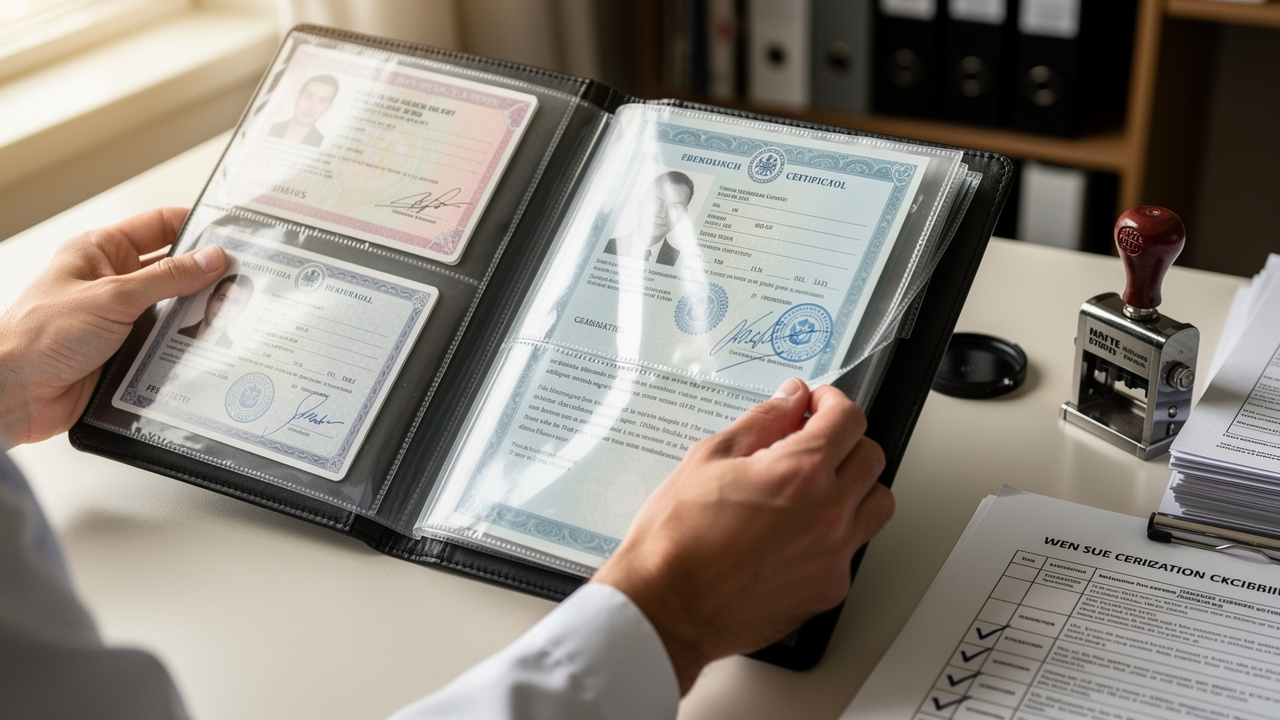
When doctors ask what is AHPRA going to expect from them, they are really asking about sequence and timing. While details differ between pathways, there is a common pattern of steps that most IMGs will follow.
The process moves from verifying basic qualifications, to proving English proficiency, to completing any required exams, to securing supervised work, and then putting together a detailed application. Treating it as a clear sequence rather than a mystery helps reduce stress and avoid repeated paperwork.
Step 1 – Primary Source Verification Through EPIC
Primary Source Verification (PSV) means confirming directly with the issuing institution that a doctor’s medical degree is genuine. For IMGs, this is done through the ECFMG’s EPIC service, which connects with the Australian Medical Council (AMC) and AHPRA.
The doctor:
-
Creates an EPIC account
-
Uploads their degree and other requested documents
-
Authorises EPIC to contact their medical school
The school confirms details such as graduation date and degree type, and EPIC reports the result to the AMC and other nominated bodies.
Delays can occur when universities are slow to respond, records are old, or there have been administrative changes. Starting PSV early is wise, as this step must be complete before many other parts of the process can move forward.
Step 2 – Determining Your Eligible Registration Pathway
After PSV is underway, the next key step is to confirm which AHPRA registration pathway applies. This is where earlier questions about what is AHPRA and how it classifies IMGs become very practical.
Doctors can use the AMC website to review pathway descriptions and self‑assessment tools. Important factors include:
-
Country where the primary degree was awarded
-
Whether the school is in the World Directory of Medical Schools
-
Nature and location of postgraduate training
-
Any specialist qualifications
For doctors with complex backgrounds, advice from migration agents or medical recruitment specialists may help. At LearnMedicine, we also offer an Interactive Pathway Quiz that guides IMGs toward the pathway that best matches their training and goals. It is important to remember that eligibility rules are fixed and not open to negotiation.
Step 3 – Meeting English Language Proficiency Requirements
Strong English skills are essential for safe practice in Australia, so the Medical Board has clear English language standards. Proof of English is a standard part of answering what is AHPRA looking for in a registration file.
Common options include:
-
IELTS Academic – usually a minimum of 7.0 in each band
-
Occupational English Test (OET) – usually a minimum grade of B in each component
Test results must be recent, often within the last two years at the time of application.
Some doctors may be exempt if they completed secondary and tertiary education in specific English‑speaking countries. However, it is important to read the exemption rules carefully. Because tests may need repeating, it is wise to plan English exams early in the process.
Step 4 – Completing Required Assessments (AMC Exams For Standard Pathway)
For Standard Pathway candidates, the AMC exams are central. They are how AHPRA and the Medical Board check that an IMG’s knowledge and skills match Australian expectations.
-
The AMC CAT MCQ Examination is a computer‑based multiple‑choice exam that runs for several hours and tests core clinical knowledge across medicine, surgery, obstetrics, paediatrics, psychiatry, and general practice.
-
After passing the MCQ, candidates can apply for the AMC Clinical Examination, a series of stations that assess history taking, examination, diagnosis, management plans, communication, and professionalism.
These exams focus on Australian guidelines and practice patterns, which means even experienced doctors need focused preparation. At LearnMedicine, we support this phase with recall‑based clinical cases, structured templates for history and examination, and clear links to Australian guidelines. Our all‑access membership gives ongoing entry to AMC Clinical and PESCI courses, plus weekly live interactive classes and long‑term Telegram support.
Step 5 – Securing An Approved Position And Supervision Arrangement
For many types of limited or provisional registration, AHPRA expects an approved job and supervision plan before registration is granted. This can feel like a “Catch‑22”, because employers often prefer candidates who are already registered.
An approved position usually sits in a hospital, clinic, or general practice that can offer appropriate supervision. The supervising doctor must have general or specialist registration, and a clear supervision plan must describe how feedback and assessment will occur.
Many IMGs find more opportunities in rural, regional, or outer metropolitan areas where workforce need is high. State health departments sometimes run targeted recruitment programs for these areas. At LearnMedicine, we guide doctors on reading job ads, understanding supervision levels, and timing applications so that AHPRA and employment steps line up as smoothly as possible.
Step 6 – Submitting Your Complete AHPRA Application
Once exams, English proof, PSV, and job offers are in place, it is time to submit the AHPRA application. This is where a lot of time can be lost if documents are missing or incorrectly certified.
Typical requirements include:
-
Certified copies of passports and identity documents
-
Degree certificates and transcripts
-
AMC results
-
English test results
-
Proof of work rights in Australia
-
Certificates of good standing from every jurisdiction where the doctor has been registered
-
Criminal history checks from each relevant country
All documents must meet AHPRA’s strict certification rules.
Applications are submitted through AHPRA’s online portal, with detailed forms and fees. Common problems include incomplete employment histories, certification that does not match AHPRA’s wording, or missing certificates of good standing. At LearnMedicine, our membership includes detailed CV and cover letter review against Australian standards and AHPRA expectations, which can reduce the risk of “please resubmit” emails and long delays.
“Slow paperwork is one of the biggest hidden costs for IMGs. A clear checklist and careful document preparation save months.”
— LearnMedicine Faculty
AHPRA Registration Timeframes And Financial Costs: What To Expect
When planning an Australian medical career, time and money are just as important as exam scores. A clear view of likely timeframes and costs helps set realistic expectations and reduces stress on both doctors and their families.
Processing times and expenses can vary, but some patterns are consistent. Knowing these in advance makes the phrase what is AHPRA feel less like a mystery and more like a set of milestones that can be planned and budgeted.
Expected Timeframes For Each Registration Pathway
For doctors on the Competent Authority Pathway, the period from starting assessment to securing provisional or limited registration often falls between six and twelve months, assuming PSV, English tests, and documentation are handled promptly.
For the Standard Pathway, the whole process tends to be longer. From starting AMC MCQ preparation to limited registration, many candidates take between eighteen months and three years. This window includes exam preparation, waiting times for exam dates, job hunting, and AHPRA processing time.
The Specialist Pathway is the most variable. Some doctors move through in around a year, while others need several years, especially if extra training or exams are required. Delays most often come from:
-
Slow responses for PSV
-
Exam scheduling
-
Incomplete applications
-
Slow issuing of certificates of good standing
Staying organised, responding quickly to requests, and starting verification steps early can shorten these waits.
Comprehensive Cost Breakdown For IMGs
The financial side of AHPRA‑related registration can be significant, especially for Standard Pathway candidates. Planning ahead avoids shocks later.
Typical costs include:
-
EPIC primary source verification – fees in the range of a few hundred US dollars
-
English language tests – IELTS or OET fees, sometimes repeated
-
AMC exams – the MCQ and Clinical Examination each costing several thousand Australian dollars
-
AHPRA application and registration fees – initial and annual renewal fees
-
Supporting documents – certification costs, criminal history checks, postage and courier charges
-
Professional services (optional) – migration agents, registration consultants, or paid courses and coaching
When everything is added together, Standard Pathway costs frequently reach a five‑figure Australian dollar amount. Checking AHPRA and AMC fee schedules regularly is important, as fees change over time.
Maintaining Your AHPRA Registration: Ongoing Professional Obligations

Gaining registration answers the first part of what is AHPRA for a doctor. The next part is learning how to keep that registration active and in good standing year after year.
Registration maintenance is more than paying a yearly fee. It involves CPD requirements, insurance, health and conduct declarations, and keeping contact details accurate. These tasks might feel administrative, but they are central to safe, accountable practice.
Annual Registration Renewal Requirements
AHPRA registration must be renewed every year by a set deadline. Renewal is done online through the AHPRA portal and involves both payment and a series of formal declarations.
Doctors are asked to confirm that they meet registration standards, including CPD and professional indemnity insurance. They must declare:
-
Any criminal charges or convictions
-
Any regulatory actions in Australia or overseas
-
Any health conditions that may affect safe practice
If renewal is not completed on time, registration lapses and the doctor must stop practising. Late renewal may be possible for a limited time, usually with extra fees, but gaps in registration can cause employment and visa problems. Setting calendar reminders and treating renewal as a non‑negotiable deadline is essential.
Continuing Professional Development (CPD) Requirements For Medical Practitioners
The Medical Board of Australia requires most doctors to complete 50 hours of CPD each year. This is part of how AHPRA and the Board make sure doctors keep their knowledge and skills current.
These hours are spread across three activity types:
-
Educational activities – courses, conferences, online modules
-
Reviewing performance – peer review, feedback, workplace assessments
-
Measuring outcomes – audit, quality improvement projects
Doctors must also be enrolled with a CPD Home, an organisation accredited to help plan, record, and report CPD. Records of activities, hours, and learning outcomes must be kept carefully, as AHPRA runs random CPD audits.
At LearnMedicine, our courses are approved by AMA CPD Home, and each course provides a substantial block of CPD hours. Because our all‑access membership gives entry to every course, doctors can build their yearly CPD program around topics that also support exam preparation, PESCI performance, and daily clinical practice.
Professional Standards And Code Of Conduct Compliance
Beyond exams and CPD, AHPRA and the Medical Board expect doctors to follow clear professional standards. The main document is “Good medical practice: a code of conduct for doctors in Australia”, which sets out what safe, ethical practice looks like.
Key themes include:
-
Providing high‑quality clinical care
-
Communicating clearly and respectfully
-
Maintaining trust and professional boundaries
-
Keeping accurate and timely records
-
Practising within one’s skills and experience
-
Following advertising rules and social media guidance
Doctors have mandatory reporting duties when they become aware of certain types of serious misconduct or impairment in colleagues. Breaches of the code can lead to notifications, investigations, and possible disciplinary action. Understanding this code is a core part of understanding what is AHPRA expecting from every registered doctor, not only from IMGs.
The National Register Of Practitioners: Transparency And Public Access
One of AHPRA’s most visible tools is the National Register of Practitioners. This is the website that patients, employers, and colleagues use when they want to check whether a health practitioner is registered and under what conditions.
The register supports transparency for the public and gives doctors an official source to direct people to when they need to prove their registration. It also helps employers with fast, accurate background checks.
What Information Is Publicly Available On The Register
The national register is freely accessible on the AHPRA website. Anyone can search by name or profession and see a list of matching practitioners.
For each doctor, the register shows:
-
Full name
-
Profession
-
Principal place of practice
-
Registration type and status
-
Any public conditions, undertakings, or reprimands
-
Recognised specialties (for specialists)
Private details, such as home address or full employment history, are not displayed. However, the information that does appear is enough for patients and employers to confirm that a doctor is currently registered and whether any practice restrictions apply.
How To Use The Register To Verify Your Own Registration
Doctors should check their own register entry from time to time. This is a simple way to confirm that details are correct and that no unexpected information has appeared.
The process is straightforward:
-
Search for your name and confirm the spelling.
-
Check the principal place of practice.
-
Review your registration type and status.
-
Confirm there are no unexpected conditions or notations.
If anything is wrong or out of date, contact AHPRA to request a correction.
Having a clean, accurate register entry is part of professional presentation. Many doctors include their AHPRA registration number on CVs and direct employers to the register during job applications.
How The Medical Board Of Australia And AHPRA Work Together
Many IMGs start by asking what is AHPRA and only later realise there is also a Medical Board of Australia. These are separate bodies with different roles, even though they spend most of their time working together.
A useful way to think about it is that the Medical Board sets the rules and makes decisions, while AHPRA runs the systems and manages the day‑to‑day work. Knowing this division helps doctors understand who is responsible for what.
The Medical Board’s Policy And Standard-Setting Role
The Medical Board of Australia is the National Board responsible for the medical profession. Its members include experienced doctors and community representatives, appointed to provide both professional and public perspectives.
The Board:
-
Sets registration standards, such as English language requirements, CPD rules, and professional indemnity expectations
-
Publishes codes and guidelines that describe acceptable professional behaviour
-
Makes decisions about whether individual applicants meet the standards for registration and what registration type they should hold
-
Reviews notifications and complaints, deciding on outcomes ranging from no action to conditions, suspension, or cancellation
Some decisions can be reviewed through legal processes, but AHPRA staff do not decide these matters alone; they act under the Board’s direction.
AHPRA’s Administrative And Operational Support Function
AHPRA provides the infrastructure that allows the Medical Board to do its work. It:
-
Manages application portals and practitioner records
-
Maintains the national register
-
Processes incoming applications and checks documents
-
Collects information and performs initial assessments when notifications arrive
Questions that require professional judgement, such as whether a practitioner’s behaviour meets standards, go to the Board or its committees.
For most interactions, doctors communicate with AHPRA through forms, emails, and phone calls. The decisions they receive, however, are formally decisions of the Medical Board of Australia. When doctors understand this partnership, it becomes clearer why some questions can be answered by call centre staff while others have to wait for a Board meeting.
Common AHPRA Registration
Once doctors move beyond the basic question of what is AHPRA, a new set of questions appears. These usually relate to common registration problems that delay applications or create extra stress. Knowing the most frequent issues makes it easier to avoid them.
Frequent problems include:
-
Incomplete or inconsistent documentation – missing periods of employment, unexplained gaps in the CV, or differences between dates in various documents often trigger requests for clarification.
-
Incorrect document certification – wording, stamp, or signer does not match AHPRA’s rules.
-
English test timing issues – test results expire before the AHPRA application is lodged or exemptions are assumed incorrectly.
-
Misunderstanding registration types – expecting general registration straight after exams without supervised practice, or assuming clinical work can be done on observerships without any registration.
At LearnMedicine, we see these patterns often, so we help doctors build AHPRA‑friendly CVs, plan English testing at the right time, and understand realistic timelines for each registration type. This turns common AHPRA registration problems into a checklist of issues that can be managed, instead of surprises that appear late in the process.
Conclusion
For any doctor hoping to practise in Australia, the question “what is AHPRA” is far more than a definition. It is a doorway into a detailed system that connects exams, supervised work, legal requirements, and lifelong professional standards.
We have looked at AHPRA’s role as the national regulator, the National Scheme that supports it, and the main registration pathways open to IMGs. We explored registration types, the step‑by‑step process from primary source verification to final application, realistic timeframes and costs, and the ongoing duties that come with being on the register.
This system can feel strict, but it also offers something valuable. It sets a clear standard for all practitioners, local and international, and gives patients confidence in the care they receive. With accurate information, thoughtful planning, and the right support, IMGs can move from asking what is AHPRA in confusion to using that knowledge as the foundation of a stable Australian medical career.
At LearnMedicine, our goal is to stand beside IMGs through this process with recall‑based AMC and PESCI courses, CPD accredited via AMA CPD Home, live teaching, community support, and careful guidance on AHPRA‑related steps. With a structured approach, each part of registration becomes just another step, not an obstacle.
FAQs
What Is AHPRA In Simple Terms?
AHPRA is the Australian Health Practitioner Regulation Agency. It is the national body that manages registration for doctors and 15 other health professions across all states and territories. If a doctor wants to practise legally in Australia, they must be registered through AHPRA with the Medical Board of Australia.
Do I Need AHPRA Registration Before I Sit The AMC Exams?
No. AHPRA registration is not needed before sitting the AMC CAT MCQ or AMC Clinical exams. For the Standard Pathway, the usual order is:
-
Primary source verification through EPIC
-
AMC exams
-
Securing a supervised position
-
Lodging an AHPRA application
AHPRA registration is needed before starting clinical work, not before taking the exams.
How Long Does AHPRA Registration Usually Take For IMGs?
Timeframes vary by pathway and how organised the documentation is. For many Standard Pathway IMGs, the period from starting AMC preparation to receiving limited registration can range from about eighteen months to three years. Competent Authority candidates may move faster, while Specialist Pathway cases can take longer. Early PSV, careful paperwork, and prompt replies to AHPRA help reduce delays.
Can I Work As An Observer Without AHPRA Registration?
Non‑clinical observerships, where a doctor only watches and does not provide hands‑on care, may sometimes be arranged without AHPRA registration, depending on the hospital’s policies. However, any direct clinical work with patients – such as examining, prescribing, or making clinical decisions – requires appropriate registration. It is always important to confirm with the hospital and, if needed, check directly with AHPRA.
How Can LearnMedicine Help Me With AHPRA And The AMC Process?
At LearnMedicine, we focus on the parts of the process that IMGs find hardest. We help doctors understand which pathway fits their background, prepare for AMC Clinical and PESCI interviews with recall‑based cases and live teaching, and build AHPRA‑ready CVs and cover letters. As a provider of AMA CPD Home–accredited activities, we also support doctors after registration with structured CPD that meets Medical Board standards while strengthening day‑to‑day clinical skills.


 Google