
Many international medical graduates freeze the moment they start planning their PESCI interview prep, unsure if their overseas clinical habits will pass muster with an Australian panel. The stakes feel high because this interview, not a written exam, decides whether you can start working as a GP in Australia. Add limited interview slots and a fee that disappears if you miss your date, and it’s easy to feel stuck before you even begin.
The Pre-Employment Structured Clinical Interview, or PESCI, is a scenario-based clinical interview that checks whether an international medical graduate can practice safely within Australian general practice. Knowing how to prepare for PESCI interview scenarios means understanding the application timeline, the interview structure, and the clinical and communication skills panels expect. This guide covers each piece, plus how structured programs like LearnMedicine turn scattered study into confident performance. Read on for a clear plan instead of guesswork.
Key Takeaways
The PESCI is a job-specific, scenario-based interview, not a generic written exam.
Apply only when genuinely ready, since missing an offered date forfeits your fee.
Base your clinical answers on Australian guidelines, not home-country training habits.
Practicing clinical reasoning out loud and running mock interviews builds real confidence.
Structured courses, such as LearnMedicine’s PESCI program, speed up readiness with expert feedback.
Table of Contents
- What Is the PESCI Interview and Who Needs It?
- How Does the PESCI Application and Timeline Work?
- What Are the Best Strategies to Prepare for the PESCI Interview?
- What Common Mistakes Should IMGs Avoid Before the PESCI?
- The Takeaway
- Frequently Asked Questions
What Is the PESCI Interview and Who Needs It?

The PESCI is a structured, panel-based clinical interview conducted over Zoom to check whether an international medical graduate can work safely in Australian general practice. It uses realistic patient scenarios rather than textbook questions, so candidates must show clinical reasoning, communication skill, and awareness of the Australian healthcare context, not just recall facts.
International medical graduates seeking limited or provisional registration for a specific GP role usually need to sit a PESCI before the Medical Board of Australia and AHPRA (Australian Health Practitioner Regulation Agency) will finalize registration. Because the interview is tied to a particular job and location, the scenarios you face may reflect a rural clinic, a metropolitan practice, or another specific setting. A panel of trained assessors runs the session, evaluating every candidate against the same national standards to keep the process fair.
How Does the PESCI Application and Timeline Work?

The PESCI application process runs on a fixed timeline, typically scheduling your interview 4 to 12 weeks after your complete application is received. This waiting window means preparation has to start well before you hit submit, not after a date lands in your inbox. Interview slots are limited throughout the year, so candidates who apply without a real study plan often end up rushing.
Timing your application matters just as much as studying the content. If you know you need more than 12 weeks, it’s smarter to wait and apply once you’re closer to interview-ready.
According to the official PESCI Handbook, declining or missing an offered interview date results in forfeiting the full fee, so treat your application date as a genuine commitment rather than a placeholder.
What Documents and Fees Are Required?
Before applying, gather the eligibility documentation your administering body requires, since incomplete applications delay scheduling.
Fees: Generally between $2,450 and $2,500 AUD, depending on the provider
Forfeiture risk: This amount is lost if you accept then miss your interview slot
Required reading: The official PESCI Handbook, which outlines exact requirements, deadlines, and policies you’re expected to already know on interview day
What Are the Best Strategies to Prepare for the PESCI Interview?
The best way to prepare for a PESCI interview combines Australian-specific clinical knowledge, structured scenario practice, sharp communication, and basic technical readiness for the online format. None of these pillars work well alone. A candidate who knows Australian guidelines but can’t verbalize reasoning clearly under time pressure will struggle just as much as one who communicates beautifully but defaults to unfamiliar management plans. Treat preparation as building all four skills together, ideally starting months before your application rather than weeks before your interview.
Master Australian Clinical Guidelines and Systems
Your clinical answers need to match Australian standards, not the protocols you trained under overseas. This means studying RACGP and eTG guidelines directly instead of assuming your home-country approach will transfer. You’ll also need working knowledge of:
Medicare and how it shapes patient care decisions
The Pharmaceutical Benefits Scheme (PBS) and its prescribing implications
Standard referral pathways within the Australian system
Cultural safety awareness when caring for Aboriginal and Torres Strait Islander patients
Practice with Realistic Clinical Scenarios

Scenario-based rehearsal is the single most useful preparation method, since the interview itself is built entirely around realistic GP presentations. Work through common cases, chronic disease, mental health, pediatrics, women’s health, under timed, interview-like conditions. Practice saying your reasoning out loud rather than jumping straight to an answer, and use structured frameworks like SOCRATES for pain history or AMPLE for background information to keep your responses organized under pressure.
Sharpen Communication and Professionalism
Assessors listen for clear, patient-centered communication just as closely as clinical accuracy. Practice explaining diagnoses and management plans in plain language, free of jargon, and rehearse handling sensitive topics with empathy. Since Australian general practice serves a culturally varied population, adapt your communication style for patients from different backgrounds, and let your reasoning stay transparent so the panel can follow how you arrived at each decision.
Prepare Technically for the Online Format
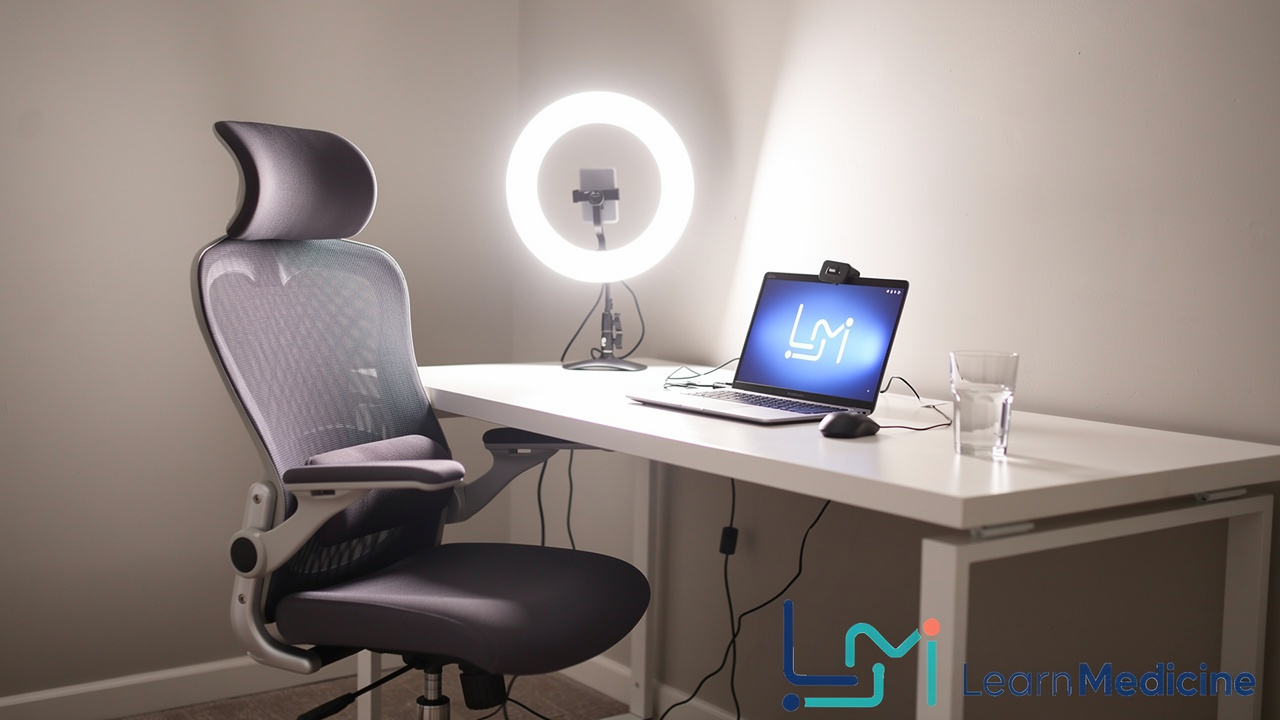
Since the RACGP conducts the PESCI over Zoom, technical readiness deserves real attention rather than an afterthought.
Test your internet connection, webcam, and microphone days before the interview, not the morning of
Set up a quiet, professional, distraction-free space
Have a backup device or secondary internet source ready in case something fails mid-interview
Get Structured Support and Feedback
Structured coaching turns scattered self-study into a real plan with feedback loops, which is often the difference between passing on the first attempt and needing to reapply. LearnMedicine offers live role-play and case discussion classes, with four or more sessions running weekly, giving candidates real-time practice with structured history-taking and clinical reasoning. Its single membership also unlocks a 500-plus hour content library covering both AMC Clinical and PESCI preparation, so candidates aren’t juggling separate subscriptions.
Beyond content volume, feedback from educators familiar with PESCI’s job-specific format helps candidates correct blind spots they can’t see on their own. The platform’s courses are also AMA CPD Home approved, offering 15 to 25 CPD hours per completed course, which benefits both PESCI candidates and practicing GPs maintaining registration requirements.
What Common Mistakes Should IMGs Avoid Before the PESCI?
Most PESCI setbacks trace back to a handful of recurring, avoidable mistakes rather than gaps in medical knowledge. Recognizing these early lets you fix them before they cost you an interview attempt.
Defaulting to home-country clinical habits. Many IMGs unconsciously apply management approaches from their training country instead of RACGP or eTG guidelines, which assessors notice quickly.
Weak verbalized reasoning. Being clinically sound isn’t enough if you can’t explain your thinking clearly and step by step while the panel listens.
Poor time management. Rushing through scenarios or over-explaining minor details both hurt scores, so practicing pacing matters as much as content knowledge.
Applying before you’re ready. Submitting an application just to “get in the queue” risks forfeiting your fee if you later need more preparation time.
The Takeaway

Passing the PESCI comes down to three things working together, solid knowledge of Australian clinical guidelines, deliberate scenario practice, and clear, confident communication. Treat your application timeline as part of your strategy, not an afterthought, and only submit once you can genuinely handle a scenario under time pressure. Rushing the process, or skipping structured practice, is the most common reason candidates need a second attempt.
If you want that practice built around real PESCI expectations rather than generic exam prep, LearnMedicine’s structured courses, live sessions, and educator feedback give you a guided way to build that confidence before interview day. Start early, apply once you’re genuinely ready, and let deliberate practice do the rest.
Frequently Asked Questions
Question: How long does it take to prepare for the PESCI interview?
Most candidates need three to six months, depending on prior clinical exposure and exam experience. Since interviews are scheduled 4 to 12 weeks after a complete application, start studying before you apply rather than after you receive a date.
Question: What happens if I fail the PESCI interview?
Reattempt policies and waiting periods vary, so check the official PESCI Handbook for exact rules on your pathway. Most candidates use assessor feedback to target weak areas, such as reasoning clarity or Australian-specific knowledge, before reapplying.
Question: Is the PESCI harder than the AMC Clinical Exam?
They test different things, so “harder” depends on your strengths. The AMC Clinical Exam is a broad, multi-station OSCE covering many specialties, while the PESCI is narrower and job-specific, focusing on real-world GP scenarios and communication.
Question: Can I do the PESCI interview from overseas?
Yes, the RACGP conducts the PESCI over Zoom, so you can sit it from anywhere with a stable internet connection. This makes the assessment accessible to candidates still living outside Australia during their registration process.
Question: What should I wear and how should I present myself for the PESCI?
Dress and present yourself as professionally as you would for an in-person clinical assessment. Maintain eye contact with the camera, sit in a distraction-free space, and treat the online format with the same seriousness as a face-to-face interview.
Question: Do PESCI preparation courses count toward CPD hours?
Yes, many do. LearnMedicine’s courses, for example, are AMA CPD Home approved and offer 15 to 25 CPD hours each, which benefits both PESCI candidates and practicing GPs maintaining ongoing registration requirements.

 Google